Well burrowed, old mole!

Essays on Philosophy

Eugenics and Capital
eugenicsdefectives

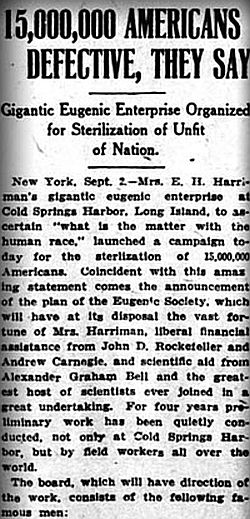
Problem: Why did the Soviets end up equating genetics and fascism?

Definitions:

Capitalism–form of social organization in which the economy is the sovereign principle, the economy being that dimension of human activity concerned not only with securing sustenance for living bodies but with the production of profit through exchange of commodities

Biologism–social mythology which functions to avert discussion of social matters in terms of historical/social categories (i.e. class) by claiming to analyze human beings according to ‘natural’ categories which are always already historical but not acknowledged as such.

Geneticism–With the elaboration of biology in the 20th century according to the Mendelian-Darwinian synthesis a new subcategory of biologist ideology was born. According to this ideology, if there is no inheritance of acquired characteristics, the distribution of characteristics and resultant inequalities within human populations can be explained by reference to differences within the gene pool without reference to any outside factors.

Demographic Politics–the conception of politics beginning in the bourgeois epoch where the object of the interventions of power is the statistically analyzed population as a biological thing.

Eugeni-conomy–The capitalist principle combined with demographic politics and geneticism gives rise to a tendency toward an economically oriented “rationalization of the species.” This is the capitalist form of utopia which it is destined to repeat as a demand so long as it maintains itself in existence.    

________________________

Under the capitalist form of social organization everything in on the market.  This includes bodies and the molecules that compose them insofar as industrial techno-science can render them accessible to marketization-economization-commodification. This gives rise to two potentially disastrous tendencies:

1. Human Monoculture

2. Molecular Market

We have by no means reached either of these limits.  However, in our own day we are seeing a re-normalization of eugenic or para-eugenic discourse both in an increasingly meanspirited ‘let-em-starve’ libertarianism, and under the rubric of various forms of genetic screening and biotechnology.  The possibility of therapeutic interventions today is used to cushion the potential shock of the reintroduction of a way of thinking that was thoroughly discredited by the Nazis as a representative of the global eugenics movement of the 20th century.       
The Stoics and First Philosophy

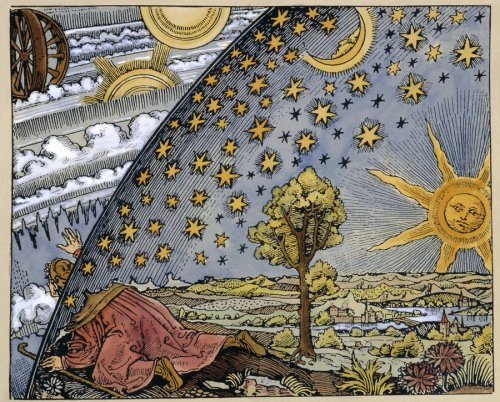
The Stoics offer us a key to developing an egalitarian alternative to ontology. A Stoic line of reasoning might proceed as follows. All relations are cosmic relations.  By definition, the cosmos is an inter-related totality. We call this the logos. Hence we do not have ontology, we have philosophical cosmology. Instead of the ontological difference, the conditional relation is our first principle. 

flammarion_engraving_custom-741e49ab7cc68a364f290fd15634c3c1f2ee30e5-s900-c85

The cosmos is the material embodiment of logos, it is the practical, corporeal enacted logos; but this same process is at work in our minds. Our minds are products of a certain series of cosmic relations—combinations, transformations and so on—which are also the inevitable contents of our thoughts. Our minds are capable of grasping the relational backgrounds that bring them into existence. This is the cosmological foundation of materialism.

We can achieve grounded materialist objectivity if we want to because we can gain enough information from our environment to explain the material foundations of our own thought processes.

The logos is thinkable for our minds because it is the set of physical preconditions for the existence of the mind—in a sense they are impressed upon the mind, as in evolutionary predispositions like breathing seeking to escape fire the physical knowledge involved in walking and so on.

These evolved instincts are millennia of adaptive activity compressed into our bodies. They express a subconscious logic in which the conduct of our lives is indistinguishable from the surroundings, an ongoing logical process in which we participate.

Real logic has content, it is in the form of conditional relations. All formal or subjective logics derive from this material and practical foundation—the cosmos is structured as a totality of conditional relations—the subjective formalistic logic seeks to negate the content and neglects the conditional.

Conditions must always preceed categories.

Gangsters and Realism

step_by_step_greene

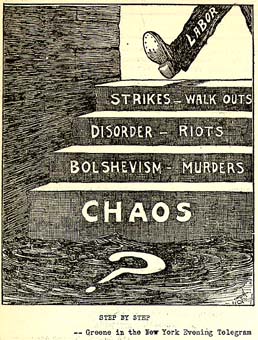
In politics there is one question. Do we want to do everything right or do we want to win? Do we want to be ‘correct’ or do we want to actually achieve the aim? This divides idealists and materialists, reformists and revolutionaries.

In society we have reform groups that need to be ‘correct’ in terms of the dominant significations (i.e. “law”) in order to achieve credibility, a place at the table etc. These groups get grants and support for their role as loyal opposition within domination.

We also have direct action groups which do not recognize these dominant significations. Among them, there are some which are most feared by the establishment. Following Onyx’s lead, we can look to the film Menace 2 Society, the character O-Dog, described as “America’s nightmare. Young, black, and just don’t give a fuck.”  We can also look to the film State Property where we see Beans and his crew working by direct action and showing the most intense contempt for the law. This culminates in Beans’ idea of how things ought to be, with his people shooting up the courtroom; in this act throwing physical force against symbolic power. That would have been gangsta.

Deleuze and Guattari held that Capitalism produces the schizo as its gravedigger. Let us think again about what this system is producing. It is producing the gangsta and the gang. Today we would have to write Capitalism and Gangstas. Placing this in a slightly different relation, perhaps we could see the gang as the contemporary form of the soviet–the effective form of working class organization. However we come to it, this is of the greatest importance for emancipation.

For too long we have allowed the law enforcement apparatus to code the phenomenon of gangsterism. Despite the systems efforts to mark and separate ‘workers’ and ‘criminals,’ the truth is plain. Most gangsters are working class people who take matters into their own hands, the legalism common to the system and the left is sickening, the gangsta’s rejection of this bullshit indicates an approach to emancipatory activity. The gang is the alternative to the party. This insight is nothing new. We can look to the “affinity group” which we find defined as a “street gang with an analysis.”

The prison is the most important institution of bourgeois society.  The gangs have discovered means of negating this form of social violence. Gangs have developed advanced underground cultures that make the left appear very naive. There is an incredibly inventive realism that we can find in criminal organizations. Knowledge of the strategies and tactics of law enforcement, the modes of exercise of power in society, the real map, requires a thorough knowledge of the underworld, the unmapped portions of the economy or social reality, the ‘there be dragons’ of state cartography. The victory of working people only occurs through a recognition of the community that demolishes the walls surrounding the ghetto, that storms the Prison Industry, the Bastille-function, that is the prime term of bourgeois power.   

The gangster is a worker with a gun without allegiance to the state. Dangerous. A gang is an armed working class organization. The genesis of gangs is from the system’s vain attempt to calculate superfluous lives. The system attempts to plan that certain people will not live, that certain social sectors will not be supported. The gangster rejects this and fights the system in order to live. Thus, everyday life becomes a sort of revolution in which the conditions of survival have been declared illegal and in order to live one must ignore and break the law.   

De Quincey as Philosophic Historian

The Last Days Of Immanuel Kant

On Murder, Considered As One Of The Fine Arts {Descartes Hobbes Spinoza Kant Malebranche Berkely

The German Language, And Philosophy Of Kant

A Peripatetic Philosopher

The Literature of Knowledge and the Literature of Power

Fasting Aesthesis Desire

Yesterday I was fasting sortof. While not eating, I was walking around the airport and marveling at a lot of food but without hunger for it. I explained that I was taking an “aesthetic” interest in the food and not an acquisitive one.  A “purely aesthetic interest in it”…what does that mean? Aesthesis is sensing as such—so it could not have meant a visual but also a tactile, a taste, a smell and so on.  I was allowing the food to stimulate me in some sense, but not my desire to consume it. It was then I realized that aesthetic experience is something that acts on the boundaries of our desires, it is not so much that aesthetic experience provokes desire, but that it gives us something to use to recalibrate, to reconstruct our desires.  This is vital in a capitalist world in which one of the main obstacles to autonomy is the pernicious operation whereby people pre-match the bounds of their desire to what the market is willing to offer them at any given time whether it is products services human relationships etc …

Rhetorical Analysis

The rational actor model/game theory as a mode of understanding consciousness.

“The hardest part of the method is making/modeling reality” See lakoff

it mirrors in a very exaggerated fashion the way that everyone encounters being, even the uncertainty at its base, the never knowing is this is the right way to segment the whole.

Two interrelated problems define all theories and allow them to be most fruitfully analysed by the rhetorical methodology (1) locating complexity (2) exclusion.

Kenneth Burke in his Rhetoric of Motives discusses the need which some people feel to segment being and raise one portion of it up as representative of/more important that all the rest, this is the raison d’etre of rhetorical analysis and such analysis can be applied to all sciences and fields of human endeavour, with the goal of unifying it with that which it excludes, for exculsion is the means by which closure is effected, by which ‘bindingness’ and ‘necessity’ arise,  it is also the means by identity is formed, this is not that.

Exclusion is the rhetorical, location of complexity is the rhetorical as well. Anything about which anything can be said admits of a rhetorical analysis, and probably more stuff too.

In 1600’s English the term ‘objective’ meant: “Existing as an object of thought or consciousness as opposed to having a real existence; considered as presented to the mind rather than in terms of inherent qualities[1]” while the term ‘subjective’ meant, “Pertaining to the subject as to that in which attributes inhere; inherent; hence, pertaining to the essence or reality of a thing; real, essential.[2]

The inversion of these came in the second half of the eighteenth century–something of a “Copernican Revolution” in English semantics.  Further inquiry into the semantics of ‘objectivity’ reveals that it has a noun sense, “The point towards which the advance of troops is directed; a military target” which relates to a goal and “Characterized by objecting; that states objections.”

One should also note the oppositions which this term is implicated in. There is the opposition with ‘subjective’ which is very well attested, the opposition with ‘biased’ the opposition with ‘relative’ with ‘inferentially apprehended’ ‘emotionally involved’ ‘speculative’ ‘in our minds’.

What are the implications of this most basic notion being subject to such radical fluctuation? That its meaning is complex, rather than simplex?


[1] The oxford english dictionary, as exemplified by the following quotation: “J. PEARSON Expos. Creed (1839) ii. 168 ‘In the beginning was the Word’; there was must signify an actual existence; and if so, why in the next sentence (‘the Word was with God’) shall the same verb signify an objective being only?”

[2] OED “

Stupidity Philosophy Civilization

“[A] tyrant institutionalizes stupidity, but he is the first servant of his own system and the first to be installed within it. Slaves are always commanded by another slave. Here too, how could the concept of error account for this unity of stupidity and cruelty”

Stupidity is political. This is true in a two senses: first, certain populations are characterized through the attribution of stupidity, defined as a lack of intelligence understanding, or some other uniquely human mental characteristic; second, stultification practices arise which function to stupefy the population.  What both have in common is an element of misrecognition. Stupidity seems always to involve a semi-conscious misrecognition: a refusal to see the truth, one on the border of conscious intention, but never quite conscious or unconscious, never quite intentional or unintentional.

The market is a great tyrant in this sense.

“Stupidity is not animality. The animal is protected by specific forms which prevent if from being ‘stupid’ [betise]….[S]tupidity, finally, is the faculty for false problems; it is evidence of an inability to constitute comprehend or determine a problem as such”

Civilization has always relied upon a logic of domestication. It domesticates animals, breeding them for slaughter and servitude, homo sapiens is no exception, the ideal citizen is happy to serve in the military and does not gripe about extraction of surplus value when he comes home.  The reproduction of social hierarchy and domination require that a great deal of what one might call ‘animal insight’ or ‘animal materialism’ be transformed, redirected or suppressed in the population. It is not for nothing that our emotions, that our impulses tell us having to go to work is bullshit, that having to answer to a boss is not the best possible option, that it is better to be free than to be enslaved and so on. It is within this context that we can see the present state of philosophy and civilization–[Utah Phillips as a sort of anarchist Socrates] .

Overall, stupidity is the cultivation of false problems. The animal does not know the false problem.  It is naturally a materialist. It is absurd to imagine an idealist wolf or lion.  Stultification is thus an active process: it is not so much that inquiry is crippled, which it sometimes is, but that false problems are subsidized and elaborated.

We new Philosophers

Phillips’ poetry and stories ex-pose the false capitalist problems. He lived his thought etc etc. He is a true philosopher on the pre-socratic model that we must take heed of if philosophy is not to die. or something like that. His thought shows how philosophy ignores reality and we can get back to the real problems if we attend.

His sensibility: hobo-nomad revolutionary


Notes on Incarceration and Politics

The threat of arrest and detainment  is a major deterrent to political action in modern societies. The political moment is the moment in which this threat of arrest is displaced.  In that moment, affective disidentification with the law crystallizes from vague notions of reform or transgression[1] and people mobilize as a law unto themselves.

There is good reason for arrest and detention to be such a deterrent. First, the judicial/correctional system marks/criminalizes bodies in various ways. Second, the judicial correctional system’s objective conditions are magnified/amplified/mythologized/mystified in social discourses/practices of terror.

We must begin with gangs.  We can call them American soviets[2]–i.e. the spontaneous form of organization adopted by working class communities. Gangs are one example of organizations that have developed strategies for negating arrest and  incarceration as a deterrent to action They do this by having a network on both sides of the wall. In many cases, gangs begin by establishing hegemony within correctional facilities, and then their hegemony begins to spread to the outside world as converts are released.

Knowing that they are affiliated with an organization that can guarantee them security behind bars, these people are less inclined to fear incarceration: moreover, knowing that the organization values certain acts very highly, as indications of loyalty, intensity, courage and so on, adherents can anticipate gains in status based on performing illegal acts.  Thus, many are lead to a progressive disidentification with the law, both affective and cognitive.

Mark Twain’s famous novel, Huckleberry Finn offers us a very clear example of the arrival of a ‘political moment’ figured forth in the life of an individual.  Huck disidentifies with “god’s law” and in a sense his action becomes a law unto itself.

Likewise, the recent events in Athens, Greece give us a more straightforwardly political example.

From the other angle, namely the reactionary angle, we can see the emergence of the new right wing after the demise of post-war American liberalism as an example of a political moment.[3]

Overall, the political moment arises from an affective displacement. As Spinoza held, an affect can only be displaced by another stronger affect.[4]


[1] Cf. Pecheux/Theories of Discourse Disidentification vs. rebel vs. conformist

[2] Mike Davis preface to A World of Gangs xvi and preceding

[3] Suburban Warriors  Also Thomas frank and Naomi Klein

[4] Ethica IV (Of Human Bondage, or the Strength of the Emotions)

Prop. 7. An emotion cannot be checked or destroyed except by a contrary emotion which is stronger than the emotion which is to be checked.

Keny Arkana – V pour Vérités

Poetry and Civilization

The Place of the Poet

  • Poesis-According to the Oxford Dictionary of Philosophy, this term can be translated using the English word ‘production[1].’  This word ‘production’ derives from Latin, pro-ducere  “to lead forward, to bring forth, to draw out[2]” and this is the multiple role of the poet that I would like to focus on here;  the poet leads, creates, and selects, these three activities are interrelated.
  • In what sense does the poet lead? Adorno, in perhaps his most famous quotation, said, “To write poetry after Auschwitz is barbaric” let us start from this quotation.  Does Adorno intend for the wells of poesy to run dry after the holocaust? I would say that he does not, that with this quotation he is acknowledging the holocaust as an event that solicits the foundations of culture.  The poet cannot pick up his or her instruments and operate in good faith as if he or she were writing in 1929, or 1829 for that matter, the poet must acknowledge an abyss, a chasm across which communication is difficult if not impossible.  All poetry written now must have this barbarism in its mind, must live with the knowledge of the complicity of language and its entire metaphysical heritage with this event, and the inadequacy of language when faced with it.  What can language possibly say? Who is not reduced to a stammer to a stutter?
  • Memory can be quite short.  The poet leads indirectly by choosing to remember.  The poet reduced to silence and tears before this event, the poet unable to respond to this traumatic reality in an adequate fashion,  in what sense can this being lead? In what sense is it possible for the poet this powerless figure to lead? Certainly not in the modernist sense of the poet as re-creator of the world, the romantic sense of the legislator, but rather in a more subtle way.  Now, it may very well be true that due to the nature of poetry poets are more sensitive to human suffering, more concerned to feel for the entire human race, to express the human condition and so on, but they do not do very well in the direct leadership role, like Annunzio taking Fiume. The poet leads, like it or not, but in an oblique way.   The poet leads by dismantling language, as Deleuze and Guattari discuss in their many texts on the minor and major modes of handling language, the poet puts language in variation, drawing it away from the majority language of the state, the stable, rational, traditional usage.   The poet breaks up the “mandatory language” the poet dissociates thought and habitual usage, the metaphysical inheritance of a profoundly unlivable civilization.
  • What does the poet bring forth and draw out?  I would argue that the poet simultaneously brings forth and draws out.  The poet brings forth a universe, a world, the inherited world,( this holds at least for poets writing in the European and other Majority languages of the world a problem which I regretfully cannot enter into right now) and in the double gesture of his or her writing simultaneously draws out, extracts something that he or she hopes is not in complicity with the genocidal inheritance under which he or she labors.  Each of the words that we use, that constitute us, has a history, and the poet cannot control this, this heritage of language, from the bloody birth of linguistic memory in the human being, to the death camps, this all floods into view upon utterance of the first syllable.  One cannot speak, but one must.  But the poet can play this language against itself, can turn it inside out, can as Deleuze and Guattari say, “make language stutter.”  How is this done?  Language is a sort of bond between sounds/letters and concepts/affects, language is made to stutter when the bond between these is jeopardized, when there is no longer an automaticity to this connection,  when language no longer operates as a seamless code, but begins to burst, the threads begin to loosen, the subject begins to dissociate from the forms that constitute it.  One’s own language is made foreign.

[1] poiesis. Answers.com. The Oxford Dictionary of Philosophy, Oxford University Press, 1994, 1996, 2005. http://www.answers.com/topic/poiesis-1, accessed May 06, 2008.


[2]Produce. Online Etymology Dictionary, November 2001.  http://www.etymonline.com/index.php?term=produce accessed May 06, 2008.