Well burrowed, old mole!

Essays on Philosophy

The Problem of Postmodernism

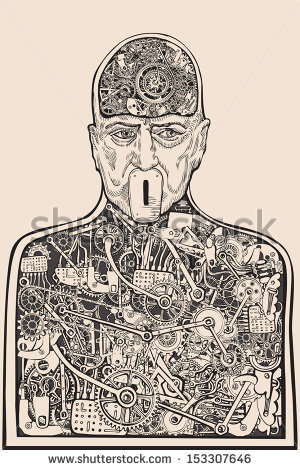
stock-vector-coin-operated-automaton-153307646

In his essay, “Twilight of the Machines” John Zerzan speaks the truth about the “postmodern” age.  He is not a scholar in the bourgeois university,  as many other critics are, which means he does not have to jump through the hoops of academic convention; he may speak the radical truth. Zerzan speaks as a philosopher and a revolutionary, breaking radically with the “Washington Consensus” of market totalitarian society. 

Read the rest of this entry »

My “Cosmopolitanism”

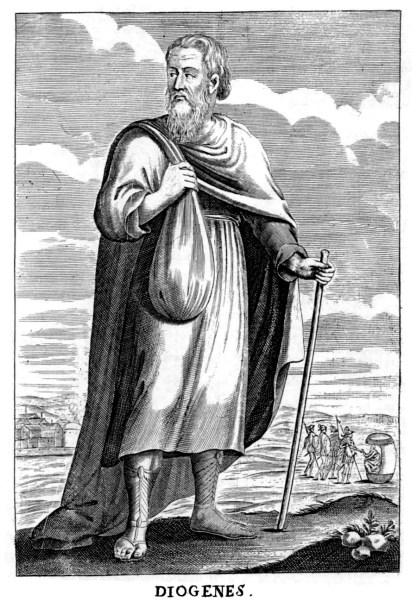
diogenes_in_thomas_stanley_history_of_philosophy

It is becoming increasingly difficult to find any work that is not collaboration with evil.  Workfare and food insecurity, the threat of becoming “surplus humanity,” of slums, work camps and prisons, battlefields; these things try to intimidate us into a collaboration with evil, but they can never succeed. It can never be said that we had to–there’s always that moment of heightened contradiction, of a decision for or against open collaboration. In that moment, it is equally possible to recognize the contradiction and repudiate all collaboration. Evil can never enjoy full and total monopoly because the earth itself defies it.

Read the rest of this entry »

Improper Life (Book Review)

Timothy C. Campbell, Improper Life: Technology and Biopolitics from Heidegger to Agamben, University of Minnesota Press, 2011, 189pp., $25.00 (pbk), ISBN 9780816674657.


Timothy Campbell’s Improper Life is an exposé of the consequences of accepting Martin Heidegger’s philosophy of technology. As he explains on page one, “to the degree that we speak of biopolitics today, lurking beneath is a conception of technology deeply indebted to Heidegger’s ontological elaboration of it.” He aims to isolate the emergence of a politics of death in Heidegger, and to show how it has impacted thinkers who try to critically appropriate Heidegger’s work. This book is a response to a crisis within contemporary academia; the historicist/posthumanist/biopolitical paradigm seems to be incapable of offering anything but fatalistic prophecies of doom when it comes to the relation between life and technology.  Campbell follows Heidegger’s ontologization of technology in the work of Giorgio Agamben, Roberto Esposito and Peter Sloterdijk. The first three chapters of the book are devoted to critical readings and in the fourth, Campbell offers an outline of what he calls an affirmative biopolitics which historicizes biopolitics instead of ontologizing it and thus releases other potentials than the current entanglement of technology and death. 

Read the rest of this entry »

Drama and Rhetoric

shooting1

Some people believe that unity of action in drama refers to the presence of one all-encompassing unity, a single self-consistent action that is the subject of the drama. How one interprets this element of drama depends on a reading of the word action, a delimitation of its meaning. Action is ambiguous between the deed and the event. Action can mean a single deed done by a subject; however, it can also mean a combat of armed soldiers, in other words, it can also describe a grand and multi-subjective action. This is an action undertaken by groups of people. No single subjectivity can be held responsible for it. If we reflect for a moment, all action in drama is of this nature; there is tension between multiple characters, it is not the self-consistent act of one subject, but rather the actions of multiple subjects that give rise to the continuing action of drama.

Read the rest of this entry »

On Work

bourgeois-pig

Serving the bosses is going out of style. The bosses, o the bosses, those bosses. The ‘boss’ mentality is an evolutionary atavism: in a sane society, what we call a boss, a general, a banker, economist etc. would be referred to as a sociopath. The bigger the boss, the more monstrous the deformity.  Serving these bosses is going out of style.

They have robbed the country in broad daylight. They are snatching the bread from our mouths with their austerities and budget hoaxes. Under the Ancien Regime, the bosses were exempt from all taxation and we see the return of this now.  The bosses are demanding a total reduction of the social wage under the guise of budget cuts. Who has stepped forward to denounce this and call for action? This is a declaration of total war. 

Read the rest of this entry »

Stockholm Syndrome And Political Subjectivity

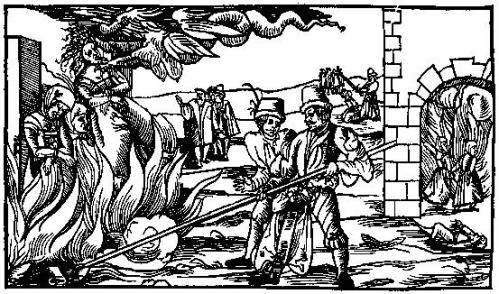
witchburning

Wikipedia, drawing on the work of Nils Bejerot, defines Stockholm  syndrome as follows:

Stockholm syndrome is a psychological response sometimes seen in abducted hostages, in which the hostage shows signs of loyalty to the hostage-taker, regardless of the danger or risk in which they have been placed. The syndrome is named after the Norrmalmstorg robbery of Kreditbanken at Norrmalmstorg, Stockholm, Sweden, in which the bank robbers held bank employees hostage from August 23 to August 28 in 1973. In this case, the victims became emotionally attached to their victimizers, and even defended their captors after they were freed from their six-day ordeal. The term “Stockholm Syndrome” was coined by the criminologist and psychiatrist Nils Bejerot, who assisted the police during the robbery, and referred to the syndrome in a news broadcast.

In other words, Stockholm Syndrome is a response to a traumatic event wherein the subject forms a loyalty bond to the other that inflicts violence on it. This process also describes the constitution of political subjectivity through trauma—it is the logic of the social bond. The International Dictionary of Psychoanalysis defines trauma as:

an event of such violence and suddenness that it occasions an inflow of excitation sufficiently strong to defeat normally successful defense mechanisms; as a general rule trauma stuns the subject and, sooner or later, brings about a disorganization of the psychic economy.

As politics is always as much about reproduction as production, political subjectivity is perpetually reproduced by new trauma and by events which trigger the return of old trauma. As Freud put it in one of his models of the traumatic process:

traumatic effect came into play only…on the occasion of a second scene that served to reactualize the repressed memory of the earlier one.

These events must continue to occur, or political subjects will begin to break down. This recurrence is accomplished externally and internally. Consider a subject who is ticketed for parking illegally and later reminds him or herself not to park in that spot again: there is a chain of events which begins outside the subject and continues inside of it.
Consensus and Violence

houghton_ec-b1328-620ib_-_novum_organum_scientiarum

As Lord Bacon said, scientia potentia est: knowledge is power. Bacon warns the inquirer, the natural philosopher against the ‘four idols’– various forms of social prejudice– as obstacles to inquiry, and claims elsewhere that his inductive logic is superior to Aristotelian logic because it can be used to create new knowledge that makes life better, not merely to codify established truths. This seems like a great idea, science alleviating human misery; however, for Bacon, science can only investigate nature, it cannot inquire into matters of church and state. 

Read the rest of this entry »

Ethics Practice Becoming

mv5bmjmwnzmzmtq0ml5bml5banbnxkftztgwnjexmzuwnje-_v1_ux182_cr00182268_al_

     Aristotle said that Ethics is not like other forms of knowing.  It cannot tell us what is ethical, for this decision must be made on a case by case basis by the individual, but it can look into the means by which one can become ethical. He gives us a very impressive explanation of how one comes to be virtuous; it is through doing virtuous things that one acquires a virtue, so, if I want to be brave, I should do brave deeds then I shall become a brave person. Aristotle calls this type of knowing practical science, this is not the same as theoretical science because it cannot specify details at the same granularity. 

     It is interesting to consider the relation of means and ends in this schema of virtue acquisition; it seems that the Platonic idea of Virtue as its own end is here faced with the idea of Virtue as its own means.  In both of these schemas it can be said that virtue is not a means to any other end, but these two different ways of disagreeing with that idea have very different implications.  Ethics only studies the means of virtue, how one becomes virtuous, it does not tell us what is virtuous in detail.  For Aristotle ethics is not a metaphysical thing, it is inseparable from politics; for Plato, Ethics is metaphysical and is related to the idea rather than the act. 

Read the rest of this entry »

On The Origin of Human Knowledge

g1code

A Cluster of Problems

I.  Series’ and Meaning                                                            

When we think of the meaning of words, we think usually of their use in propositions and sentences.  Some of these sentences are attempts at definition by various dictionaries and scientists and so on.  If we look in greater detail at these definitions we can see that they refer to other definitions, which in their turn refer to other definitions.  This is called the ‘infinite regress’ and this is the essential and irreducible feature of language, its fundamental truth. 

     It is possible to view this chain of reference as being one of many which construct a web or a field which is the matrix from which uses of language draw, and which, on the whole, constitutes a language’s semantic structure.  When looking at definitions, we see certain concepts or signifiers which are used in an attempt to stabilize the system of reference.  These can be called centers, and language can be said to rely on a network with multiple centers from which it draws meaning.

     The idea that language has stable meaning is analogous to the way a counterfeit bill remains ‘legitimate’ so long as it is passed from hand to hand.  What this process requires is not a positive belief in the legitimacy of the bill; it requires the non-presence of disbelief in the bill’s legitimacy.  Despite what the logician might say, ‘I believe’ and ‘I do not disbelieve‘ express two differing positions. One of which is a positive belief and one of which we can call a negative belief.

      Read the rest of this entry »

Incomplete Thoughts on Privilege and Order     

10416_16    

In order for privilege to continue to exist it requires the cooperation of those whose non-privileged status makes privilege possible.  Law is the chief means by which this marvelous and absurd co-operation is ensured in modern society.  Privilege is the modern equivalent of slave mastery.  One cannot be a master without at least one slave.  One person’s privilege is another’s disenfranchisement.  Privilege is non-corporeal inequality.  It shatters the very idea of human nature, if some are privileged, one cannot speak of one humanity, but a heterogeneous humanity of masters and slaves. What universality can there ever be if one group is exploited by another? How can herd and herdsmen be seen as one, or see each other as of the same species?

Read the rest of this entry »