Well burrowed, old mole!

Essays on Philosophy

Category: Science

Laclau Notes Session 3

Review of the History of Rhetoric in Relation to Philosophy

1. The Ancients-Form and Matter     

     For the Greeks, what is sayable of an object is universal, but we must ask, what is the “it” which receives the predications?  For the Greeks all predicables are universals; they make up the form or the rational and knowable part of the entity of the object.  The “it,” the irrational and unknowable individuation that remains when you take away all predicables, is called matter. The Greek thought of the universe as a scale.  At the bottom was the unnameable primary matter hyle.  The first principle of organization was the mineral world where form was imprinted on this primary matter.  The mineral world was as matter to the vegetable world, the vegetable to the animal, the animal world to man, and on top the Gods were pure form and stood as matter in relation to nothing.  

Read the rest of this entry »

Notes on the Linguistics of Pecheux

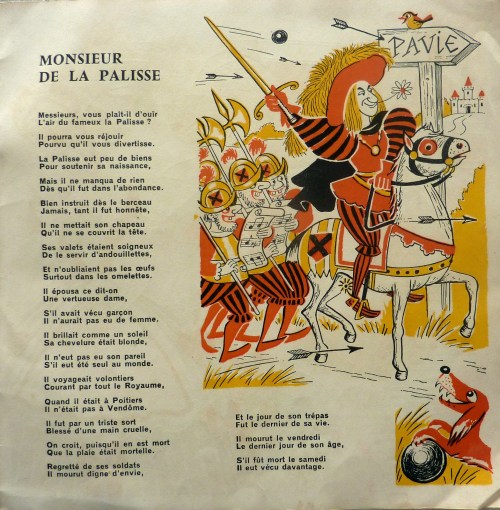
monsieur-de-la-palisse

Notes are based on :

Michel Pecheux LANGUAGE, SEMANTICS AND IDEOLOGY  © Francois Maspero 1975 English translation © Harban, Nagpal 1982

Read the rest of this entry »

Consensus and Violence

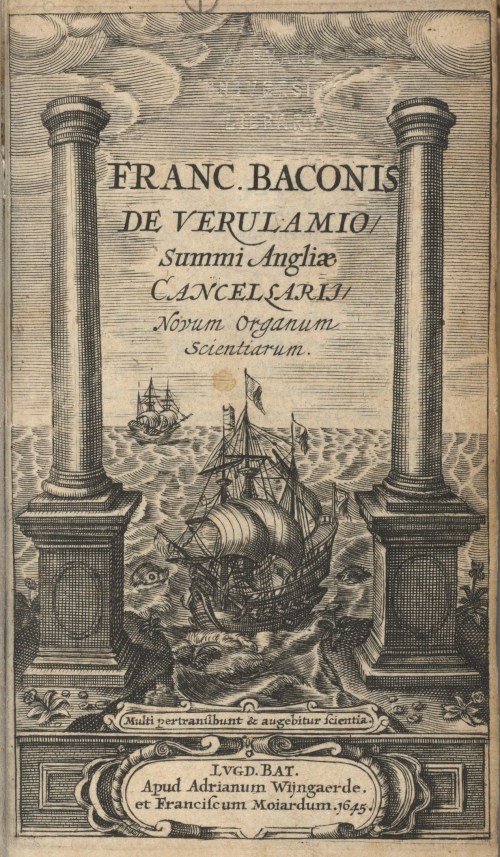
houghton_ec-b1328-620ib_-_novum_organum_scientiarum

As Lord Bacon said, scientia potentia est: knowledge is power. Bacon warns the inquirer, the natural philosopher against the ‘four idols’– various forms of social prejudice– as obstacles to inquiry, and claims elsewhere that his inductive logic is superior to Aristotelian logic because it can be used to create new knowledge that makes life better, not merely to codify established truths. This seems like a great idea, science alleviating human misery; however, for Bacon, science can only investigate nature, it cannot inquire into matters of church and state. 

Read the rest of this entry »

On The Origin of Human Knowledge

g1code

A Cluster of Problems

I.  Series’ and Meaning                                                            

When we think of the meaning of words, we think usually of their use in propositions and sentences.  Some of these sentences are attempts at definition by various dictionaries and scientists and so on.  If we look in greater detail at these definitions we can see that they refer to other definitions, which in their turn refer to other definitions.  This is called the ‘infinite regress’ and this is the essential and irreducible feature of language, its fundamental truth. 

     It is possible to view this chain of reference as being one of many which construct a web or a field which is the matrix from which uses of language draw, and which, on the whole, constitutes a language’s semantic structure.  When looking at definitions, we see certain concepts or signifiers which are used in an attempt to stabilize the system of reference.  These can be called centers, and language can be said to rely on a network with multiple centers from which it draws meaning.

     The idea that language has stable meaning is analogous to the way a counterfeit bill remains ‘legitimate’ so long as it is passed from hand to hand.  What this process requires is not a positive belief in the legitimacy of the bill; it requires the non-presence of disbelief in the bill’s legitimacy.  Despite what the logician might say, ‘I believe’ and ‘I do not disbelieve‘ express two differing positions. One of which is a positive belief and one of which we can call a negative belief.

      Read the rest of this entry »

Faust Frankenstein Prometheus

I think these three works are highly useful for thinking through the problem of technics/knowledge.

Prometheus and Epimetheus–This story from Plato’s Protagoras  shows, as Steigler has described, the originary techincity of human beings.  It shows the way that the problem of technology is radical for human beings and for thinking about the history of this species.  It also ties into the problem of stupidity as Deleuze expounds it, “animals are protected by specific forms” from stupidity [betise]. This story gives an account of this absence of specific form in the human being.

Faust–This play, by Goethe not Marlowe, against complacency.  When Faust stops striving to be god-like, he loses his soul to Mephistopheles. Mephistopheles will serve Faust so long as he does not become complacent. This conditional mastery that Faust enjoys depicts the situation of the human race in the face of technics.  Faust must fight complacency in order to keep his soul, if he becomes complacent, Mephistopheles takes the soul, it is his by the terms of their agreement.

Frankenstein–This novel depicts a terrible experimentation. Dr. Frankenstein in many ways re-enacts the story of the Golem, but this time it is via electricity harnessed through secular science that he does the deed.

Eugenics and Capital

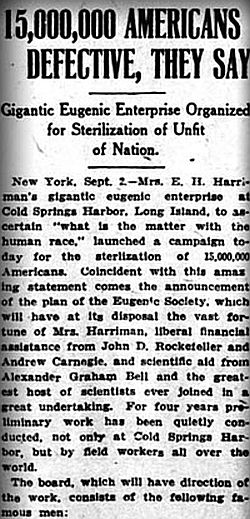
eugenicsdefectives

Problem: Why did the Soviets end up equating genetics and fascism?

Definitions:

Capitalism–form of social organization in which the economy is the sovereign principle, the economy being that dimension of human activity concerned not only with securing sustenance for living bodies but with the production of profit through exchange of commodities

Biologism–social mythology which functions to avert discussion of social matters in terms of historical/social categories (i.e. class) by claiming to analyze human beings according to ‘natural’ categories which are always already historical but not acknowledged as such.

Geneticism–With the elaboration of biology in the 20th century according to the Mendelian-Darwinian synthesis a new subcategory of biologist ideology was born. According to this ideology, if there is no inheritance of acquired characteristics, the distribution of characteristics and resultant inequalities within human populations can be explained by reference to differences within the gene pool without reference to any outside factors.

Demographic Politics–the conception of politics beginning in the bourgeois epoch where the object of the interventions of power is the statistically analyzed population as a biological thing.

Eugeni-conomy–The capitalist principle combined with demographic politics and geneticism gives rise to a tendency toward an economically oriented “rationalization of the species.” This is the capitalist form of utopia which it is destined to repeat as a demand so long as it maintains itself in existence.    

________________________

Under the capitalist form of social organization everything in on the market.  This includes bodies and the molecules that compose them insofar as industrial techno-science can render them accessible to marketization-economization-commodification. This gives rise to two potentially disastrous tendencies:

1. Human Monoculture

2. Molecular Market

We have by no means reached either of these limits.  However, in our own day we are seeing a re-normalization of eugenic or para-eugenic discourse both in an increasingly meanspirited ‘let-em-starve’ libertarianism, and under the rubric of various forms of genetic screening and biotechnology.  The possibility of therapeutic interventions today is used to cushion the potential shock of the reintroduction of a way of thinking that was thoroughly discredited by the Nazis as a representative of the global eugenics movement of the 20th century.