Well burrowed, old mole!

Essays on Philosophy

Category: Rhetoric

Laclau Notes Session 4: Contingency in Theory

1. Back to the Ancients

     The most ferocious attack on Rhetorical Theory came from Plato.  He claimed that rhetoric had no epistemological value at all. Rhetoric is concerned with the discursive movement of deliberation and not the question answer and two term choices which dialectic employs. In the Gorgias, Platon condemns rhetoric because it offers no coherent account of its own status as a form of knowledge, and because it is not possible to delineate a class of objects with which rhetoric is concerned.  Rhetoric is nomadic; it has no specificity and no domicile.  It is to be considered defective and incomplete by a Platonist because it offers a false ontology; it deals with the appearance of truth and good not the definition of the truth or the good.  It offers no epistemological certainty or foundation.  Above all, Plato judged rhetoric to be an amoral instrument of practical politics, unlike ontology and epistemology of course.  A paradox emerges from this account: though rhetoric is tangible and deals with the tangible its arguments cannot stand up to critical scrutiny. 

Read the rest of this entry »

Laclau Notes Session 3

Review of the History of Rhetoric in Relation to Philosophy

1. The Ancients-Form and Matter     

     For the Greeks, what is sayable of an object is universal, but we must ask, what is the “it” which receives the predications?  For the Greeks all predicables are universals; they make up the form or the rational and knowable part of the entity of the object.  The “it,” the irrational and unknowable individuation that remains when you take away all predicables, is called matter. The Greek thought of the universe as a scale.  At the bottom was the unnameable primary matter hyle.  The first principle of organization was the mineral world where form was imprinted on this primary matter.  The mineral world was as matter to the vegetable world, the vegetable to the animal, the animal world to man, and on top the Gods were pure form and stood as matter in relation to nothing.  

Read the rest of this entry »

Critical Notes on Ernesto Laclau’s Seminar on Rhetoric and Hegemony

Session 1: Introduction to Laclau’s Theory of Hegemony

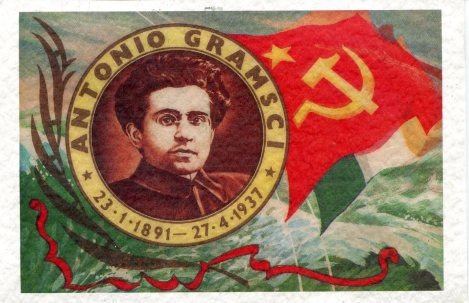
gramsci

1. Illusions of Modern Bourgeois Philosophy

     At the beginning of the 20th century three new developments in philosophy were taking place.  Each was based on a strategy which its proponents felt could grant immediate access to the thing in itself. The three strategies were analytic philosophy, phenomenology and structuralism.   All of their key words (referent, phenomenon and sign) played the role of what Levinas called a “neutralizing third term” they appeared to efface themselves in the process of bringing forth the unmediated truth of the world.  As time passed, these third terms became increasingly visible to practitioners of the strategies which they founded.  In the work of the late Wittgenstein and Richard Rorty, Martin Heidegger, Roland Barthes Jacques Lacan and Jacques Derrida we see a realization that the founding notions of 20th century philosophy did not grant the immediacy that they had promised.

Read the rest of this entry »

Notes on the Linguistics of Pecheux

monsieur-de-la-palisse

Notes are based on :

Michel Pecheux LANGUAGE, SEMANTICS AND IDEOLOGY  © Francois Maspero 1975 English translation © Harban, Nagpal 1982

Read the rest of this entry »

Plato and Ideology

golden-age  

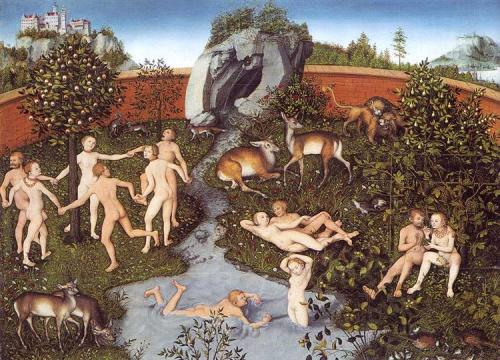
The most significant lesson that I draw from The Republic is that so long as there is luxury–i.e. class rule–there will be deception and tyranny.  The ‘city of pigs’ that Plato rejects is the crucial point in the story for me. I read Plato’s utopian writing as more of an exercise in following ideas to their conclusions than as manual for statesmen. What Plato does in this work is he attempts to rationalize privilege and he fails at it.  The book demonstrates the fact that privilege cannot be justified without using mass deception combined with censorship and the state sanctioned indoctrination of children.  The friends assembled to discuss justice do not reject the ‘city of pigs’ because it cannot be the just city, but because they (being from the privileged class in Greek society) were accustomed to a standard of living that involved luxury goods.  If they are privileged and they are the only ones in their society who have access to luxury goods, then to say that the city must have luxury goods is as much as to say that the city must have privilege. 

Read the rest of this entry »

Drama and Rhetoric

shooting1

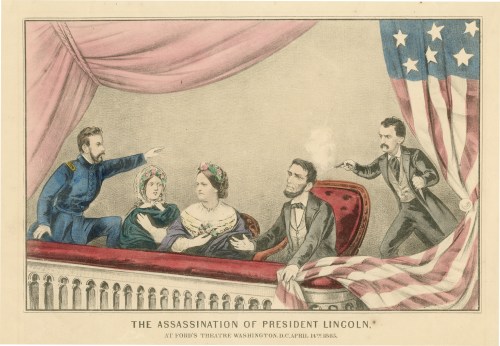
Some people believe that unity of action in drama refers to the presence of one all-encompassing unity, a single self-consistent action that is the subject of the drama. How one interprets this element of drama depends on a reading of the word action, a delimitation of its meaning. Action is ambiguous between the deed and the event. Action can mean a single deed done by a subject; however, it can also mean a combat of armed soldiers, in other words, it can also describe a grand and multi-subjective action. This is an action undertaken by groups of people. No single subjectivity can be held responsible for it. If we reflect for a moment, all action in drama is of this nature; there is tension between multiple characters, it is not the self-consistent act of one subject, but rather the actions of multiple subjects that give rise to the continuing action of drama.

Read the rest of this entry »

On The Origin of Human Knowledge

g1code

A Cluster of Problems

I.  Series’ and Meaning                                                            

When we think of the meaning of words, we think usually of their use in propositions and sentences.  Some of these sentences are attempts at definition by various dictionaries and scientists and so on.  If we look in greater detail at these definitions we can see that they refer to other definitions, which in their turn refer to other definitions.  This is called the ‘infinite regress’ and this is the essential and irreducible feature of language, its fundamental truth. 

     It is possible to view this chain of reference as being one of many which construct a web or a field which is the matrix from which uses of language draw, and which, on the whole, constitutes a language’s semantic structure.  When looking at definitions, we see certain concepts or signifiers which are used in an attempt to stabilize the system of reference.  These can be called centers, and language can be said to rely on a network with multiple centers from which it draws meaning.

     The idea that language has stable meaning is analogous to the way a counterfeit bill remains ‘legitimate’ so long as it is passed from hand to hand.  What this process requires is not a positive belief in the legitimacy of the bill; it requires the non-presence of disbelief in the bill’s legitimacy.  Despite what the logician might say, ‘I believe’ and ‘I do not disbelieve‘ express two differing positions. One of which is a positive belief and one of which we can call a negative belief.

      Read the rest of this entry »

The Courage of Truth

Courage

Who among us has the courage to utter the unspeakable? This type of courage is what is most necessary in free human beings.  The person who possesses this type of courage is the only human being who can claim to be honest.  Knowing what any group defines as the unspeakable is a major key to that group’s motives and nature.  We should always ask ourselves, what is it not possible to articulate within their way of speaking?

foucault

It is often regarded as cruelty to perform the act of speaking the unspeakable.  However this is one case where cruelty should have  positive connotations because cruelty contains an element of fearlessness which is foregrounded in this act.  Thus, there is the English expression regarding the cruelty of some truths.  The articulation of the unspeakable is often the result of a pitiless evaluation, a ruthless evaluation, an evaluation that does not judge in terms of good and evil.  This should be contrasted with the Kantian critique, the critique that justifies its object,  whose axiom is that one should begin by believing  in that which one criticizes. 

Consider a person who walks into a shopping mall and says, “the necessity of work is a myth that is used to enslave us” or the scene in I Heart Hukabees where the fireman character states that Jesus can in fact be mad at someone who believes in him, that faith is not enough.  Another example would be the case of Dr. Wilhelm Reich, and the persecution that he endured for bringing out the connections between politics and sexuality.  What do all of these people have in common? They all have the courage to articulate that which a certain situation is configured to hide. As Hegel put it, “The courage of truth…is the first condition of philosophising.”

Read the rest of this entry »

Rhetorical Analysis

The rational actor model/game theory as a mode of understanding consciousness.

“The hardest part of the method is making/modeling reality” See lakoff

it mirrors in a very exaggerated fashion the way that everyone encounters being, even the uncertainty at its base, the never knowing is this is the right way to segment the whole.

Two interrelated problems define all theories and allow them to be most fruitfully analysed by the rhetorical methodology (1) locating complexity (2) exclusion.

Kenneth Burke in his Rhetoric of Motives discusses the need which some people feel to segment being and raise one portion of it up as representative of/more important that all the rest, this is the raison d’etre of rhetorical analysis and such analysis can be applied to all sciences and fields of human endeavour, with the goal of unifying it with that which it excludes, for exculsion is the means by which closure is effected, by which ‘bindingness’ and ‘necessity’ arise,  it is also the means by identity is formed, this is not that.

Exclusion is the rhetorical, location of complexity is the rhetorical as well. Anything about which anything can be said admits of a rhetorical analysis, and probably more stuff too.

In 1600’s English the term ‘objective’ meant: “Existing as an object of thought or consciousness as opposed to having a real existence; considered as presented to the mind rather than in terms of inherent qualities[1]” while the term ‘subjective’ meant, “Pertaining to the subject as to that in which attributes inhere; inherent; hence, pertaining to the essence or reality of a thing; real, essential.[2]

The inversion of these came in the second half of the eighteenth century–something of a “Copernican Revolution” in English semantics.  Further inquiry into the semantics of ‘objectivity’ reveals that it has a noun sense, “The point towards which the advance of troops is directed; a military target” which relates to a goal and “Characterized by objecting; that states objections.”

One should also note the oppositions which this term is implicated in. There is the opposition with ‘subjective’ which is very well attested, the opposition with ‘biased’ the opposition with ‘relative’ with ‘inferentially apprehended’ ‘emotionally involved’ ‘speculative’ ‘in our minds’.

What are the implications of this most basic notion being subject to such radical fluctuation? That its meaning is complex, rather than simplex?


[1] The oxford english dictionary, as exemplified by the following quotation: “J. PEARSON Expos. Creed (1839) ii. 168 ‘In the beginning was the Word’; there was must signify an actual existence; and if so, why in the next sentence (‘the Word was with God’) shall the same verb signify an objective being only?”
[2] OED “