Well burrowed, old mole!

Essays on Philosophy

Category: Revolution

Gangsters and Realism
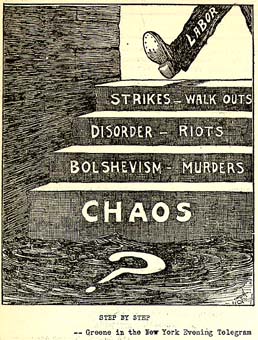
step_by_step_greene

In politics there is one question. Do we want to do everything right or do we want to win? Do we want to be ‘correct’ or do we want to actually achieve the aim? This divides idealists and materialists, reformists and revolutionaries.

In society we have reform groups that need to be ‘correct’ in terms of the dominant significations (i.e. “law”) in order to achieve credibility, a place at the table etc. These groups get grants and support for their role as loyal opposition within domination.

We also have direct action groups which do not recognize these dominant significations. Among them, there are some which are most feared by the establishment. Following Onyx’s lead, we can look to the film Menace 2 Society, the character O-Dog, described as “America’s nightmare. Young, black, and just don’t give a fuck.”  We can also look to the film State Property where we see Beans and his crew working by direct action and showing the most intense contempt for the law. This culminates in Beans’ idea of how things ought to be, with his people shooting up the courtroom; in this act throwing physical force against symbolic power. That would have been gangsta.

Deleuze and Guattari held that Capitalism produces the schizo as its gravedigger. Let us think again about what this system is producing. It is producing the gangsta and the gang. Today we would have to write Capitalism and Gangstas. Placing this in a slightly different relation, perhaps we could see the gang as the contemporary form of the soviet–the effective form of working class organization. However we come to it, this is of the greatest importance for emancipation.

For too long we have allowed the law enforcement apparatus to code the phenomenon of gangsterism. Despite the systems efforts to mark and separate ‘workers’ and ‘criminals,’ the truth is plain. Most gangsters are working class people who take matters into their own hands, the legalism common to the system and the left is sickening, the gangsta’s rejection of this bullshit indicates an approach to emancipatory activity. The gang is the alternative to the party. This insight is nothing new. We can look to the “affinity group” which we find defined as a “street gang with an analysis.”

The prison is the most important institution of bourgeois society.  The gangs have discovered means of negating this form of social violence. Gangs have developed advanced underground cultures that make the left appear very naive. There is an incredibly inventive realism that we can find in criminal organizations. Knowledge of the strategies and tactics of law enforcement, the modes of exercise of power in society, the real map, requires a thorough knowledge of the underworld, the unmapped portions of the economy or social reality, the ‘there be dragons’ of state cartography. The victory of working people only occurs through a recognition of the community that demolishes the walls surrounding the ghetto, that storms the Prison Industry, the Bastille-function, that is the prime term of bourgeois power.   

The gangster is a worker with a gun without allegiance to the state. Dangerous. A gang is an armed working class organization. The genesis of gangs is from the system’s vain attempt to calculate superfluous lives. The system attempts to plan that certain people will not live, that certain social sectors will not be supported. The gangster rejects this and fights the system in order to live. Thus, everyday life becomes a sort of revolution in which the conditions of survival have been declared illegal and in order to live one must ignore and break the law.   

Stupidity Philosophy Civilization

“[A] tyrant institutionalizes stupidity, but he is the first servant of his own system and the first to be installed within it. Slaves are always commanded by another slave. Here too, how could the concept of error account for this unity of stupidity and cruelty”

Stupidity is political. This is true in a two senses: first, certain populations are characterized through the attribution of stupidity, defined as a lack of intelligence understanding, or some other uniquely human mental characteristic; second, stultification practices arise which function to stupefy the population.  What both have in common is an element of misrecognition. Stupidity seems always to involve a semi-conscious misrecognition: a refusal to see the truth, one on the border of conscious intention, but never quite conscious or unconscious, never quite intentional or unintentional.

The market is a great tyrant in this sense.

“Stupidity is not animality. The animal is protected by specific forms which prevent if from being ‘stupid’ [betise]….[S]tupidity, finally, is the faculty for false problems; it is evidence of an inability to constitute comprehend or determine a problem as such”

Civilization has always relied upon a logic of domestication. It domesticates animals, breeding them for slaughter and servitude, homo sapiens is no exception, the ideal citizen is happy to serve in the military and does not gripe about extraction of surplus value when he comes home.  The reproduction of social hierarchy and domination require that a great deal of what one might call ‘animal insight’ or ‘animal materialism’ be transformed, redirected or suppressed in the population. It is not for nothing that our emotions, that our impulses tell us having to go to work is bullshit, that having to answer to a boss is not the best possible option, that it is better to be free than to be enslaved and so on. It is within this context that we can see the present state of philosophy and civilization–[Utah Phillips as a sort of anarchist Socrates] .

Overall, stupidity is the cultivation of false problems. The animal does not know the false problem.  It is naturally a materialist. It is absurd to imagine an idealist wolf or lion.  Stultification is thus an active process: it is not so much that inquiry is crippled, which it sometimes is, but that false problems are subsidized and elaborated.

We new Philosophers

Phillips’ poetry and stories ex-pose the false capitalist problems. He lived his thought etc etc. He is a true philosopher on the pre-socratic model that we must take heed of if philosophy is not to die. or something like that. His thought shows how philosophy ignores reality and we can get back to the real problems if we attend.

His sensibility: hobo-nomad revolutionary


Notes on Incarceration and Politics

The threat of arrest and detainment  is a major deterrent to political action in modern societies. The political moment is the moment in which this threat of arrest is displaced.  In that moment, affective disidentification with the law crystallizes from vague notions of reform or transgression[1] and people mobilize as a law unto themselves.

There is good reason for arrest and detention to be such a deterrent. First, the judicial/correctional system marks/criminalizes bodies in various ways. Second, the judicial correctional system’s objective conditions are magnified/amplified/mythologized/mystified in social discourses/practices of terror.

We must begin with gangs.  We can call them American soviets[2]–i.e. the spontaneous form of organization adopted by working class communities. Gangs are one example of organizations that have developed strategies for negating arrest and  incarceration as a deterrent to action They do this by having a network on both sides of the wall. In many cases, gangs begin by establishing hegemony within correctional facilities, and then their hegemony begins to spread to the outside world as converts are released.

Knowing that they are affiliated with an organization that can guarantee them security behind bars, these people are less inclined to fear incarceration: moreover, knowing that the organization values certain acts very highly, as indications of loyalty, intensity, courage and so on, adherents can anticipate gains in status based on performing illegal acts.  Thus, many are lead to a progressive disidentification with the law, both affective and cognitive.

Mark Twain’s famous novel, Huckleberry Finn offers us a very clear example of the arrival of a ‘political moment’ figured forth in the life of an individual.  Huck disidentifies with “god’s law” and in a sense his action becomes a law unto itself.

Likewise, the recent events in Athens, Greece give us a more straightforwardly political example.

From the other angle, namely the reactionary angle, we can see the emergence of the new right wing after the demise of post-war American liberalism as an example of a political moment.[3]

Overall, the political moment arises from an affective displacement. As Spinoza held, an affect can only be displaced by another stronger affect.[4]


[1] Cf. Pecheux/Theories of Discourse Disidentification vs. rebel vs. conformist

[2] Mike Davis preface to A World of Gangs xvi and preceding

[3] Suburban Warriors  Also Thomas frank and Naomi Klein

[4] Ethica IV (Of Human Bondage, or the Strength of the Emotions)

Prop. 7. An emotion cannot be checked or destroyed except by a contrary emotion which is stronger than the emotion which is to be checked.

Keny Arkana – V pour Vérités

Advice to the Occupy Movement:

1. Occupy is a civil war not a PR war.

The easiest way for the occupy movement to have been a waste of everyone’s time is for us to allow it to become a PR war. What does that mean: a PR war? It means allowing the movement to become a new way of marketing obedience. Public Relations is precisely the antithesis of conflict. It is a way of managing images to ensure that nothing ever happens, and if it does, to ensure that it will remain unknown and isolated.  That the occupy movement is the antithesis of everything that PR represents is the only condition for it to have any meaning whatsoever.

If it falls in with PR, which is of course the path of least resistance presented to it, it will come to nothing; there will be an Occupy-land set up at Disneyworld.  PR-ification is the easy way, it is the response that Empire hopes to divert the Occupiers into in order to restore the equilibrium that the occupation has provisionally disrupted.  We need to take a step back and ask what good can possibly come from this sort of collaborationist stance.  If we have PR on our side, will PR ever want to support actions that seriously challenge misery and starvation? or will PR instead attempt to leverage their support into a means of pacification? If we get involved with PR at this stage it will be the gravest possible mistake. What needs to happen is to bypass the world of PR and challenge its legitimacy as a depiction of reality.  This is not accomplished by conforming to its standards. Instead we need to destroy the world of PR using all available means of violence. This includes the media themselves and the sort of social fabric they create one in which violence against commodities is equated with murder, and even considered a worse crime.

2. Pacifist tactics taint everyone involved evenly – consenting or not. Destroying property destroys moral authority.

Much has been written about the need for a diversity of tactics and the inhibiting effects of dogmatic pacifism. None of this has been a call for blind terroristic violence. Instead, it has been a call for thinking about violence. Instead of starting from a position that cedes violence to the police, and renders all who resist as innocent victims and thus as negligible social force–we can call this pre-defeat–we need to start from a position of actually wanting to triumph and to destroy that which destroys us. Dogmatic nonviolence guarantees that we will lose before the first action is taken.  If the occupation movement is to be a serious force,

The affirmation of pacifism assumes that there is a good will that no longer exists between financial elites and “regular people.” We have all become superfluous and replacable in their eyes. The era of leftist new deals and decolonization movements is now over. It depended on the power of the Soviet Union which no longer exists.  Capital has shown again and again that without that external threat it does not feel compelled to make any concessions.  Soviet military force or the threat thereof was the sole motivator behind the era of concessions following 1917.  Of course, working class militancy within capitalist countries played a role, but the existing figure of revolution triumphant terrified the capitalist and induced it to attempt to buy off workers and colonial subjects through propaganda campaigns which would be severly undermined by brutal self-assertion and imposition of wage-reductions and sweat-shop conditions. Thus, the illusion of democracy. Today, instead the ideal model put forward by capital is the model of authoritarian capitalism that we can see in places like China and Signapore.  To miss this point is to struggle in vain.  Perhaps certain members of the 99 will get elevated to positions of spectacular visibility, but in the end this will depend on their renunciation of the desire of those they are supposed to “represent” by the spectacle that grants them visibility.

Pacifist tactics are complicit with the illusion according to which Capital and life are compatible.  We live in a time in which the slum is the dominant form of social development poushed by global capital.  This is where we are headed if we collaborate…


War on/as Education

Problem–The War on/as Education:  

Louis Althusser, in his essay Ideology and Ideological State Apparatuses, wrote that the school system was the most important institution for the reproduction of capitalism as an economic system and a way of life.  The educational system reproduced the skills needed for the economy and at the same time produced a certain ethos of obedience necessary to keep the other apparatuses functioning. One might be tempted to ask: what about the mass media, the spectacle? What about work? Don’t these condition us to accept things as they are, aren’t they the primary sources of servile consciousness and collaboration? Tempting as these analyses are, it is the educational system that trains children to fit themselves into work and the spectacle. It prepares them bodily and mentally to be capable of tolerating and collaborating with these institutions. Spectacle and work repeat reactivate and maintain certain fundamental behavioral, emotional and intellectual patterns which must be set in place when people are younger and more malleable.

According to Althusser, education has replaced religion as the main ISA.  Education, which was once a part of the church institution, has been taken over by secular authorities. Ironically, it was during revolutionary events like the Paris Commune that the demand for universal secular education was articulated. These demands were used as a starting point for the social contract between capital and labor that domesticated the workers movement. It was said that everyone would be given equal opportunity through equal access to universal public education. This is why Althusser, writing in 1970, could describe the school system as something which operated outside of the sphere of production to reproduce the conditions of production. This equilibrium of forces gave the school a certain freedom, a relative autonomy, from the demands of the market. Teachers, like other “professionals” (doctors lawyers etc.) could comfort themselves with the thought that they were less subject to market forces than other workers.  They enjoyed academic freedom through institutions like tenure, and the sphere of knowledge was respected as something that could not be subjected to market logic. Curriculum did not need to align explicitly with the demands of employers; students should be equipped with the tools that would help them to find employment and participate in democratic politics.

In the past thirty years, we have seen a mutation of the educational institution. Each year the relative autonomy once enjoyed by the school is reduced, and the protections from the market are erased. We can refer to this as the “war on education.”  The education reforms that are currently being enacted are part of a wider shift in governance.  Governance today operates through the paradigm of war. What does this mean? Power acting anarchically. Power has become anarchy in the sense that it operates without reference to any governing principle. It will do anything. The war paradigm allows for the suspension of all social contracts, the open violation of all laws and accountability measures. Power today only recognizes the 11th commandment–thou shalt not get caught. Margret Thatcher articulated the new model in her remark that there is no such thing as society. Unfortunately, the resistance to this new model of governance is not operating on the same terrain.  Parent groups, teachers, and students have not grasped the mutation. They are still holding demonstrations and symbolic protests that presuppose a social good will that no longer exists if it ever did.  Power is no longer listening.  To the anarchy of power, we need to oppose a positive anarchy of ungovernability and uneducability; their calculations all presuppose we will remain beneath that threshold–that we will not “throw away our future.”


Solutions: Taking Back the War

How can we respond to this problem? Power is running rampant doing whatever it wants; people can’t seem to get a handle on how to resist and so on. If education is as important as Althusser said it was, this gives people a crucial leverage point in the social war if they want it. All they need to do is to disengage from the mythology of education that power has already discarded. The school is the factory of the 21st century in the sense that it is the leverage point from which the whole social order can be overthrown.  Here we see an opening for a new kind of general strike.

(1)Recognize that what is going on is war, not reform.

First, we need to see this for what it is. The war on education aims to completely subordinate education to the market. The primary goal is to produce an education that is profitable which means, if we can judge from other privatization efforts, worse for everyone involved. Arguments about what actually works in the classroom, and what parents want for their children will be ignored or reduced to what they have in common with the demands of capital. Overall, this is the most important front in the social war. This is where power aims to break the last of the unions, and set in place an educational system that will produce the next generation of docile, post-democratic subjects.

(2)Recognize that it has always been war.

Second, we need to recognize that compulsory public education has always already been a war against our families, our communities and our children. We remain complicit in the torture of young people and remain mendacious insofar as we tell them it is for their own good.  The truth of compulsory public education has always been the reservation school. Adults need to remember their time in school, how it actually felt to be a student, and affirm that as a memory of truth.  Once we reestablish contact with the actual feeling of being-in-school, and accept it as an authentic recognition of social reality, we are in a position to thrown the myth of education in the garbage.

(3) Respond to it as such.

Third, we need to realign our tactics and strategies to fit these recognitions. Instead of symbolic protests, people need to withdraw their participation. Instead of appealing to public officials who are no longer listening, parents need to pull their children from schools. Students need to refuse to attend and hold riots when and if they are forced to attend. Teachers need to sabotage the obedience-training component of the school and overthrow the leadership of their unions through wildcat actions and occupations.

(4)Reappropriate the power of education

Fourth, we need to create. If teachers parents and students come together, if these groups organize themselves to withdraw their complicity, a new space of creative action will emerge. On the local level people can create autonomous groups in order to share knowledge, to read to discuss and to critique.  Overall, it will be found that what the public school took 15 years to teach was obedience to unjust authority and voluntary associations can educate better in less time.