Well burrowed, old mole!

Essays on Philosophy

Category: Marx

Economy and Taboo

bla3-300x220

A society’s most potent taboos are shadows of its highest values. 

Consider prostitution in relation to the historical institution of marriage; both involve an intimate exchange: the former producing money, the latter producing capital. Taboos are ontologically necessary preconditions of the “sacred.”  In order for the sacred to be, it needs to enjoy something we can call a ‘semiotic monopoly.’ Its signs must remain pure; irony is to be avoided at all costs.  In other words, the sacred gestures and ritual attitudes must not be appropriated without warrant: there must be strict and pitiless felicity conditions imposed.  Violations of these conditions of felicity are called taboos, and they carry strong punishments, not the least of which is the imputation of insanity, being declared mad.      

Read the rest of this entry »

Marx and the “Death of God”

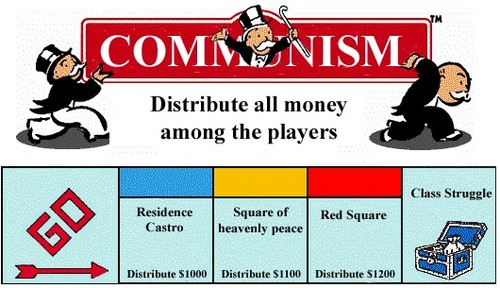
kapitalstamp 

    It is remarkable that so many postmodernists seem to mourn the death of God.  The fact that the totality is no longer total, that there is no ultimate mystical reality behind the world seems to disappoint these people.  Their writings show a pathetic nostalgia for the total even as they proclaim its opposite. 

Their actions are a part of the tradition which they place themselves over against.  We can begin with Plato and Socrates, in their confrontation with the sophists. The problem with the sophists was that their art was nomadic; it had to be domesticated.  The sophists did not teach a transcendent term that should govern all discourse, their way of teaching was foundationless.  It seems that Plato was a brilliant sophist, who appropriated many sophistic techniques in order to compose his works, but then turned around and attempted to declare himself the last prophet.  His theory of the forms is a theory of the beyond, one which falsifies the life-world and subordinates it to external concepts.  The bottom line, the most essential characteristic of Plato is his insistence on the universality of values.      

Read the rest of this entry »

Reflections on Revolutionary Consciousness

jonesumm1_1413046a   

    We must begin by acknowledging a presently existing form of anarchy, one which is largely dormant, but one that can become more manifest. In other words, we must begin by acknowledging that all existing hierarchies are based on the quasi-voluntary association of free persons to a much greater degree than is generally conceded.  Most Americans, and citizens of first world countries, live a large portion of their lives with no actual hand holding a gun to their heads and forcing them to obey anything.  Most of these countries right now run on “auto-pilot,” most people regulate themselves for the system, or more precisely are regulated under their own supervision for the system. One can even hypothesize that, following Sartre’s discussion of the solitude in which the reception of a command leaves one, without self-organization no institutions are possible at all.  In practice, there are groups of people who claim to be in charge and so on, but if their so-called subordinates do not use their own creative capacities to carry out the directives they are given nothing at all would be possible except frustration.     

     A great mass of consciousness is currently configured in such a way as to make a realization of the fact that we ultimately regulate ourselves in the interest of a system which exploits us unthinkable or at least very difficult to think. If this is difficult to think, the thought that we could reorganize in a different way should be impossible, but this is not the case.  How are people led to forget the anarchy of the pure present which is the first experience of life and its prevailing atmosphere for much of early childhood? The answer is two fold, they are not, and an attempt is made to do so by various means which it shall be our task to explore, these are commonly called “mainstream culture”.  People never forget this experience because it recurs in life very often; this is the case when one witnesses a crime, or when one is present at a momentous conjunction of forces, it is the sensation of suspension of the law.  We feel for a moment that law only exists in the past and that right now that could cease to be the case.  In this type of moment we have a taste of something, something which has been subject to manipulation and mystification for far too long. 

               It is a corollary of this position that authority is quite different than many people imagine it to be.  Mao was quite correct when he characterized the United States as a ‘paper tiger’ implying that its power was possessed of a different type of substance than it would have us believe.  This is a good figure for all authority; authority is not power, and we confuse the two at our peril.  If we wish to choose a similar image, possibly more familiar to most people in the United States, we can say that authority is a “scarecrow” or a “straw man.” How does the scare crow function? How is it possible for the paper tiger or the straw man to compel and discourage behaviors? Kenneth Burke almost explains this when he discusses the issue of  the externality of voices to the individual mind.  He claims that an external voice can never successfully compel anyone to do anything unless it is internalized, but he neglects the fact that the external voice does not just penetrate the skull by osmosis. One is not penetrated by the voice, one becomes the voice and the voice becomes one.  The farmer only has to chase the birds a few times and put up a straw man, then they regulate themselves through fear, he does not have to be present in the field at all times, yet the crows act as if he was. The important point here is that the farmer has power, and the birds have power; now, the farmer puts the straw man in the field and the crows endow it with significance, they regulate themselves based on this attribution of meaning.   Similarly, in intra-human affairs authority does not compel submission; most of what we would classify under this heading should be thought as participation in the most concrete sense in the legitimation of law. No law is ever fully legitimate but it is a constant process of legitimation.  Thus, we can say that authority depends for its force on the actions of those over whom it is said to be wielded. Authority is the legislative power, the force which is the law which never achieves legitimacy. That this should continue to return, that it should be reproduced on a daily basis bespeaks a complicity in the creation of one’s own manacles which is the basic principle of politics. 

     Thus, we can see that authority has a ritual character, and as Joseph Campbell has claimed, ritual is the enactment of myth. However, it seems that thinkers like Campbell and Eliade have performed an inversion here.  It seems that myths are both a sublimation of the individual’s role as participant in the reproduction of authority, and consumption of such myths is a form of such reproduction at the same time.  Rituals in the anthropological sense and rites of various kinds are attempts to instantiate a world in which the apologetics of the myth become truth. In the case of American society, we can formulate one example among many as follows: the first term is the oppressive workday in the work or starve environment of mutual hostility, the myth is the American Dream world of advertisements, and the ritual is the act of watching television, or visiting places such as Disneyworld where the corporate dream-world displaces focus from the life-world which surrounds it and in which its values are empty and unwelcome. However, the ritual act of watching television does not end when one turns off the set to retire.  Cues for the television watching mind exist dispersed throughout reality and the right cue can effect a televisionification of the life-world, a moment in which decisions about non-television situations are made based on principles derived from television shows. This effect is very important in the propagation of authority, but the basic principle which we can extract from it is more important.  When we say that decisions are made based on television principles, what we actually mean is that memory of the television displaces the concrete situation, the ‘social rules’ values and modes of conduct which are manifested on the television come to be identified with those which are at play in concrete non-contrived situations, memory of the television is equated with social experience, and displaces it. Thus, we can say that the basic currency of authority is memory, the creation organization and direction of memory is what keeps authority in existence.  Consciousness is composed of memory and attention and we must assert that attention is under the power of memory in most cases, in our first moments of life we have openness, but it gradually accumulates memory, through means I shall discuss in the next paragraph, which transforms it into attention and hence consciousness, most times we see what we remember to look for.

    Nietzsche has shown us how authority creates memory through violence, more specifically through cruelty.  Walter Benjamin echoes this in his discussion of the legislative force of violence.  Benjamin states that violence can be law-making, law-maintaining, or law-destroying.  What authority is composed of are disconnected acts of violence and memory networks which attempt to link them in such a way as to make them seem connected, apologized for, and justified. How are memory networks established? They correspond inevitably to networks of violence, something like Canetti’s sting of command circulating through a group, hey he kicked me so I’m gonna kick you.  The act of violence is not justified we are made complicit in it, we reproduce it and thus remove the need for justification.  In the case of America, we can say that the first law making violence was simultaneously a law-destroying violence, the revolution against England and today’s networks of law-maintaining violence occur in situations of mass audience concentration such as school-houses.  However, for the concrete individual the first acts of law-making violence are committed against them by their families who commit them as semi-conscious acts of law-maintaining violence. These acts prepare children to endure the imposition of ‘discipline’ in the schoolhouse.  The parent knows a certain sadism of command combined with paranoia, I love you but what will the others think if I do not do this coupled with how dare you resist what I do for your own good you’ll do it because it is my will.  In this case, what the parent is doing is appropriating the imperative of their own paranoia about the group, and achieving the filthy  jouissance of complicity in the crime which oppresses them in inflicting it on the child. These forces derive from the parent having undergone the same violent inscription as a child and having endured law-maintaining violence in the form of the barking sadistic boss and the merciless ticking of the office clock, as well as the hazing received as a condition of affiliation for many groups.     

     When we think, Why bother going to work, why should I? this is not depression or laziness, ( a la Nietzschean bas conscience) but a call to action in another direction, a call to form a new type of society in which joy and desire are valued rather than order and structure. It is no coincidence that we do not value order and structure until we are taught to.  These values are in no sense directly related to the pursuit of our own well-being or that of our families, they are in all instances code words for other values which if revealed would be immediately rejected.  We are told by institutions to value order and structure in our lives as a matter of their convenience, for example, a slave owner in the south would have said that he hanged a black man to maintain ‘order’ what he actually means is the order of things or the status quo.  Or today, an educational institution values the eight hour school day because it reproduces the corporate workday, and engraves it as the immutable form of normalcy in the formative period of early childhood, but the spokespersons of this way of doing things will say that it is necessary for the child to have ‘structure’ in their life.  Each of us as a living being resists stasis on the cellular level, order and structure are inimical to life if they are raised above it. 

      This question why bother? comes to most of us as an overflow of the energy of life in us wishing against ‘reason’ to cast off our shackles and live, it does not bespeak a lack of motivation it indicates a damming of the flow of desire which we seek to remove in spite of all of our so-called education.  It indicates a greater motivation to greater acts which we cannot achieve from a cubicle, acts which require that we have the time to determine our own lives and do not have to serve the system for the entire period of daylight 300 days per year.   However, the realization of the significance of this impulse, the comprehension of our own vital flows is not yet at the level of conscious awareness. In fact, the present form of social organization depends for its continued existence on the hope that this awareness will remain submerged, that this type of lucidity about our own power and this type of seizure of the power of meaning attribution over our own mental states will never come to presence in the majority of people, or even a significant minority. The system produces thousands of well-paid experts who tell us that there is something wrong with the person who does not want to live the majority of their life in a cubicle under fluorescent lights, who does not want to come home to the dull hum of the television every night.  These experts will claim that this person should take pills which help them adjust to that life, these experts never even countenance the possibility that the society is flawed, not the minds of the people.



The Great Revolution

m485a92052b971

I. Anniversaries      

     As the 25th anniversary of the fall of the Berlin wall approaches we are called to reckon with the twentieth century and what it really meant. At the time when the wall fell, we were told that History had come to an end, that liberal democracy was the final term of human social evolution, that capitalism had triumphed, that there was no alternative, that markets had shown themselves as the only possible basis for organizing the human metabolism with nature. We were told that this event was demonstrative proof that anything other than capitalism doesn’t work.

          That was the immediacy of the moment, but now that 25 years have passed, we are called to think this through with a bit more depth. What was the real meaning of this event–the fall of the USSR and the GDR the dismantling of the soviet republics and so on. What did it mean? It was impossible to say at the time because the meaning of this was still in the future.  The meaning of this event would be the capstone of the 20th century. The meaning of this event would be the doorway into the 21st century.

         On  the 100th anniversary of the Russian revolution, where will we be?  How will we answer to the tens of millions whose world-historical refutation of fascist irrationalism set the tone for the latter half of the twentieth century? Now we stand back with a bit of distance, with the accumulation of 25 years of action and reaction. We can now see how things stand and say with confidence: what happened in 1989 was the triumph of injustice over justice on a global scale. 

II. Imperialism

     There has been a feverish production of names for the system that we live under.  The bourgeois press has been busy producing words and phrases, up to and including a discourse on the impossibility of naming the system we live under. Hardt and Negri, along with many others, choose to say “empire,”  Guattari chooses to call it “integrated world capitalism,” still others will call it “technological society” or some variant of the technological motif–industry, information etc etc. Then there are those who speak of societies of control, of hyperindustrialism, totalitarianism and so on. Still others see it as a fundamental pathology of civilization and civilized life as such and so on. These names are ideological and dishonest–many are critical efforts devoted to an uncritical task–talking away the fact of imperialism.

     What we have is not empire, nor is it capitalism, nor is it civilization, nor is it globalization or its more cosmopolitan form mondalisation. The system we live under is full-blown imperialist capitalism with concentrated finance capital calling all the shots–the system that Lenin was talking about in his pamphlet on imperialism. As common as it has become in ‘enlightened’ bourgeois circles to give some kind of credit to Marx after the crisis of 2008, Lenin is the theorist of the type of capitalism that we actually live under and we act like he doesn’t even exist.


Eugenics and Capital

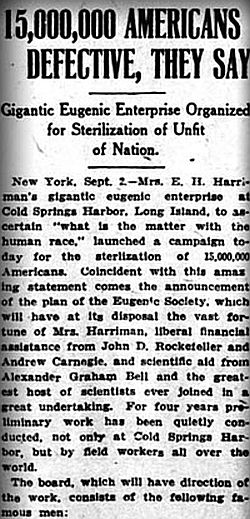
eugenicsdefectives

Problem: Why did the Soviets end up equating genetics and fascism?

Definitions:

Capitalism–form of social organization in which the economy is the sovereign principle, the economy being that dimension of human activity concerned not only with securing sustenance for living bodies but with the production of profit through exchange of commodities

Biologism–social mythology which functions to avert discussion of social matters in terms of historical/social categories (i.e. class) by claiming to analyze human beings according to ‘natural’ categories which are always already historical but not acknowledged as such.

Geneticism–With the elaboration of biology in the 20th century according to the Mendelian-Darwinian synthesis a new subcategory of biologist ideology was born. According to this ideology, if there is no inheritance of acquired characteristics, the distribution of characteristics and resultant inequalities within human populations can be explained by reference to differences within the gene pool without reference to any outside factors.

Demographic Politics–the conception of politics beginning in the bourgeois epoch where the object of the interventions of power is the statistically analyzed population as a biological thing.

Eugeni-conomy–The capitalist principle combined with demographic politics and geneticism gives rise to a tendency toward an economically oriented “rationalization of the species.” This is the capitalist form of utopia which it is destined to repeat as a demand so long as it maintains itself in existence.    

________________________

Under the capitalist form of social organization everything in on the market.  This includes bodies and the molecules that compose them insofar as industrial techno-science can render them accessible to marketization-economization-commodification. This gives rise to two potentially disastrous tendencies:

1. Human Monoculture

2. Molecular Market

We have by no means reached either of these limits.  However, in our own day we are seeing a re-normalization of eugenic or para-eugenic discourse both in an increasingly meanspirited ‘let-em-starve’ libertarianism, and under the rubric of various forms of genetic screening and biotechnology.  The possibility of therapeutic interventions today is used to cushion the potential shock of the reintroduction of a way of thinking that was thoroughly discredited by the Nazis as a representative of the global eugenics movement of the 20th century.       

The Stoics and First Philosophy

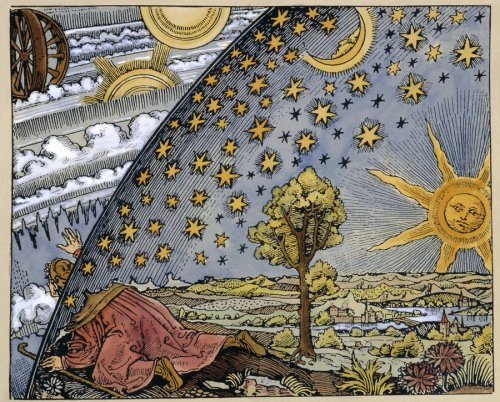
The Stoics offer us a key to developing an egalitarian alternative to ontology. A Stoic line of reasoning might proceed as follows. All relations are cosmic relations.  By definition, the cosmos is an inter-related totality. We call this the logos. Hence we do not have ontology, we have philosophical cosmology. Instead of the ontological difference, the conditional relation is our first principle. 

flammarion_engraving_custom-741e49ab7cc68a364f290fd15634c3c1f2ee30e5-s900-c85

The cosmos is the material embodiment of logos, it is the practical, corporeal enacted logos; but this same process is at work in our minds. Our minds are products of a certain series of cosmic relations—combinations, transformations and so on—which are also the inevitable contents of our thoughts. Our minds are capable of grasping the relational backgrounds that bring them into existence. This is the cosmological foundation of materialism.

We can achieve grounded materialist objectivity if we want to because we can gain enough information from our environment to explain the material foundations of our own thought processes.

The logos is thinkable for our minds because it is the set of physical preconditions for the existence of the mind—in a sense they are impressed upon the mind, as in evolutionary predispositions like breathing seeking to escape fire the physical knowledge involved in walking and so on.

These evolved instincts are millennia of adaptive activity compressed into our bodies. They express a subconscious logic in which the conduct of our lives is indistinguishable from the surroundings, an ongoing logical process in which we participate.

Real logic has content, it is in the form of conditional relations. All formal or subjective logics derive from this material and practical foundation—the cosmos is structured as a totality of conditional relations—the subjective formalistic logic seeks to negate the content and neglects the conditional.

Conditions must always preceed categories.

Gangsters and Realism

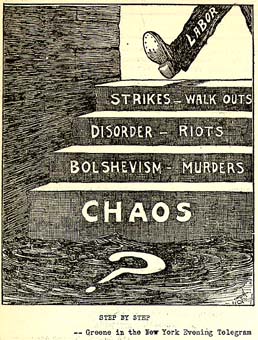
step_by_step_greene

In politics there is one question. Do we want to do everything right or do we want to win? Do we want to be ‘correct’ or do we want to actually achieve the aim? This divides idealists and materialists, reformists and revolutionaries.

In society we have reform groups that need to be ‘correct’ in terms of the dominant significations (i.e. “law”) in order to achieve credibility, a place at the table etc. These groups get grants and support for their role as loyal opposition within domination.

We also have direct action groups which do not recognize these dominant significations. Among them, there are some which are most feared by the establishment. Following Onyx’s lead, we can look to the film Menace 2 Society, the character O-Dog, described as “America’s nightmare. Young, black, and just don’t give a fuck.”  We can also look to the film State Property where we see Beans and his crew working by direct action and showing the most intense contempt for the law. This culminates in Beans’ idea of how things ought to be, with his people shooting up the courtroom; in this act throwing physical force against symbolic power. That would have been gangsta.

Deleuze and Guattari held that Capitalism produces the schizo as its gravedigger. Let us think again about what this system is producing. It is producing the gangsta and the gang. Today we would have to write Capitalism and Gangstas. Placing this in a slightly different relation, perhaps we could see the gang as the contemporary form of the soviet–the effective form of working class organization. However we come to it, this is of the greatest importance for emancipation.

For too long we have allowed the law enforcement apparatus to code the phenomenon of gangsterism. Despite the systems efforts to mark and separate ‘workers’ and ‘criminals,’ the truth is plain. Most gangsters are working class people who take matters into their own hands, the legalism common to the system and the left is sickening, the gangsta’s rejection of this bullshit indicates an approach to emancipatory activity. The gang is the alternative to the party. This insight is nothing new. We can look to the “affinity group” which we find defined as a “street gang with an analysis.”

The prison is the most important institution of bourgeois society.  The gangs have discovered means of negating this form of social violence. Gangs have developed advanced underground cultures that make the left appear very naive. There is an incredibly inventive realism that we can find in criminal organizations. Knowledge of the strategies and tactics of law enforcement, the modes of exercise of power in society, the real map, requires a thorough knowledge of the underworld, the unmapped portions of the economy or social reality, the ‘there be dragons’ of state cartography. The victory of working people only occurs through a recognition of the community that demolishes the walls surrounding the ghetto, that storms the Prison Industry, the Bastille-function, that is the prime term of bourgeois power.   

The gangster is a worker with a gun without allegiance to the state. Dangerous. A gang is an armed working class organization. The genesis of gangs is from the system’s vain attempt to calculate superfluous lives. The system attempts to plan that certain people will not live, that certain social sectors will not be supported. The gangster rejects this and fights the system in order to live. Thus, everyday life becomes a sort of revolution in which the conditions of survival have been declared illegal and in order to live one must ignore and break the law.   

War on/as Education

Problem–The War on/as Education:  

Louis Althusser, in his essay Ideology and Ideological State Apparatuses, wrote that the school system was the most important institution for the reproduction of capitalism as an economic system and a way of life.  The educational system reproduced the skills needed for the economy and at the same time produced a certain ethos of obedience necessary to keep the other apparatuses functioning. One might be tempted to ask: what about the mass media, the spectacle? What about work? Don’t these condition us to accept things as they are, aren’t they the primary sources of servile consciousness and collaboration? Tempting as these analyses are, it is the educational system that trains children to fit themselves into work and the spectacle. It prepares them bodily and mentally to be capable of tolerating and collaborating with these institutions. Spectacle and work repeat reactivate and maintain certain fundamental behavioral, emotional and intellectual patterns which must be set in place when people are younger and more malleable.

According to Althusser, education has replaced religion as the main ISA.  Education, which was once a part of the church institution, has been taken over by secular authorities. Ironically, it was during revolutionary events like the Paris Commune that the demand for universal secular education was articulated. These demands were used as a starting point for the social contract between capital and labor that domesticated the workers movement. It was said that everyone would be given equal opportunity through equal access to universal public education. This is why Althusser, writing in 1970, could describe the school system as something which operated outside of the sphere of production to reproduce the conditions of production. This equilibrium of forces gave the school a certain freedom, a relative autonomy, from the demands of the market. Teachers, like other “professionals” (doctors lawyers etc.) could comfort themselves with the thought that they were less subject to market forces than other workers.  They enjoyed academic freedom through institutions like tenure, and the sphere of knowledge was respected as something that could not be subjected to market logic. Curriculum did not need to align explicitly with the demands of employers; students should be equipped with the tools that would help them to find employment and participate in democratic politics.

In the past thirty years, we have seen a mutation of the educational institution. Each year the relative autonomy once enjoyed by the school is reduced, and the protections from the market are erased. We can refer to this as the “war on education.”  The education reforms that are currently being enacted are part of a wider shift in governance.  Governance today operates through the paradigm of war. What does this mean? Power acting anarchically. Power has become anarchy in the sense that it operates without reference to any governing principle. It will do anything. The war paradigm allows for the suspension of all social contracts, the open violation of all laws and accountability measures. Power today only recognizes the 11th commandment–thou shalt not get caught. Margret Thatcher articulated the new model in her remark that there is no such thing as society. Unfortunately, the resistance to this new model of governance is not operating on the same terrain.  Parent groups, teachers, and students have not grasped the mutation. They are still holding demonstrations and symbolic protests that presuppose a social good will that no longer exists if it ever did.  Power is no longer listening.  To the anarchy of power, we need to oppose a positive anarchy of ungovernability and uneducability; their calculations all presuppose we will remain beneath that threshold–that we will not “throw away our future.”


Solutions: Taking Back the War

How can we respond to this problem? Power is running rampant doing whatever it wants; people can’t seem to get a handle on how to resist and so on. If education is as important as Althusser said it was, this gives people a crucial leverage point in the social war if they want it. All they need to do is to disengage from the mythology of education that power has already discarded. The school is the factory of the 21st century in the sense that it is the leverage point from which the whole social order can be overthrown.  Here we see an opening for a new kind of general strike.

(1)Recognize that what is going on is war, not reform.

First, we need to see this for what it is. The war on education aims to completely subordinate education to the market. The primary goal is to produce an education that is profitable which means, if we can judge from other privatization efforts, worse for everyone involved. Arguments about what actually works in the classroom, and what parents want for their children will be ignored or reduced to what they have in common with the demands of capital. Overall, this is the most important front in the social war. This is where power aims to break the last of the unions, and set in place an educational system that will produce the next generation of docile, post-democratic subjects.

(2)Recognize that it has always been war.

Second, we need to recognize that compulsory public education has always already been a war against our families, our communities and our children. We remain complicit in the torture of young people and remain mendacious insofar as we tell them it is for their own good.  The truth of compulsory public education has always been the reservation school. Adults need to remember their time in school, how it actually felt to be a student, and affirm that as a memory of truth.  Once we reestablish contact with the actual feeling of being-in-school, and accept it as an authentic recognition of social reality, we are in a position to thrown the myth of education in the garbage.

(3) Respond to it as such.

Third, we need to realign our tactics and strategies to fit these recognitions. Instead of symbolic protests, people need to withdraw their participation. Instead of appealing to public officials who are no longer listening, parents need to pull their children from schools. Students need to refuse to attend and hold riots when and if they are forced to attend. Teachers need to sabotage the obedience-training component of the school and overthrow the leadership of their unions through wildcat actions and occupations.

(4)Reappropriate the power of education

Fourth, we need to create. If teachers parents and students come together, if these groups organize themselves to withdraw their complicity, a new space of creative action will emerge. On the local level people can create autonomous groups in order to share knowledge, to read to discuss and to critique.  Overall, it will be found that what the public school took 15 years to teach was obedience to unjust authority and voluntary associations can educate better in less time.