Well burrowed, old mole!

Essays on Philosophy

Category: Marx

Laclau Notes Session 4: Contingency in Theory

1. Back to the Ancients

     The most ferocious attack on Rhetorical Theory came from Plato.  He claimed that rhetoric had no epistemological value at all. Rhetoric is concerned with the discursive movement of deliberation and not the question answer and two term choices which dialectic employs. In the Gorgias, Platon condemns rhetoric because it offers no coherent account of its own status as a form of knowledge, and because it is not possible to delineate a class of objects with which rhetoric is concerned.  Rhetoric is nomadic; it has no specificity and no domicile.  It is to be considered defective and incomplete by a Platonist because it offers a false ontology; it deals with the appearance of truth and good not the definition of the truth or the good.  It offers no epistemological certainty or foundation.  Above all, Plato judged rhetoric to be an amoral instrument of practical politics, unlike ontology and epistemology of course.  A paradox emerges from this account: though rhetoric is tangible and deals with the tangible its arguments cannot stand up to critical scrutiny. 
Read the rest of this entry »

Laclau Notes Session 3

Review of the History of Rhetoric in Relation to Philosophy

1. The Ancients-Form and Matter     

     For the Greeks, what is sayable of an object is universal, but we must ask, what is the “it” which receives the predications?  For the Greeks all predicables are universals; they make up the form or the rational and knowable part of the entity of the object.  The “it,” the irrational and unknowable individuation that remains when you take away all predicables, is called matter. The Greek thought of the universe as a scale.  At the bottom was the unnameable primary matter hyle.  The first principle of organization was the mineral world where form was imprinted on this primary matter.  The mineral world was as matter to the vegetable world, the vegetable to the animal, the animal world to man, and on top the Gods were pure form and stood as matter in relation to nothing.  

Read the rest of this entry »

Laclau Seminar Notes Session 2: Floating Signifiers and Heterogeneity

614d92f60a37cc6f9ddc73a949e5c091


  • The Moment of Hegemony

 Screen Shot 2016-03-27 at 12.36.23 PM    

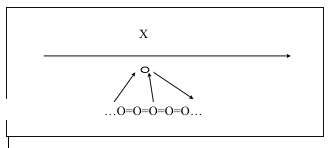
This is a simplified depiction of the moment of hegemony.  The X represents those on top of the frontier.  The antagonistic frontier can be said to be power, the X is sometimes a government.  It can also be the ruling class within a society.  The O’s below the frontier are the oppositional desires or the demands of those who are below the line.  The oval which is raised above the Os is the empty or hegemonic signifier, the arrow shows its origin from a particular desire or demand. These particular demands are arranged in an equivalential series by the emergence of the hegemonic signifier, the universalization or emptying of the hegemonic signifier is represented by the lines stretching from the oval to the chain of Os. 

This is a depiction of a situation in which those who are below the frontier of power have a series of demands which are unmet, and though their demands are different from one another, those who have these differing demands come to see them as equivalent and form a group under the articulation of one particular demand which comes to stand for opposition to X.  For instance, if many people have needs which are unmet in present day America, such as the need for affordable housing and health care, the desire to have more efficient garbage pickup in their neighborhood, the desire for a humane foreign policy and so on, they may end up campaigning for these diverse goals through the mediation of a group which articulates a different demand.  If these demands remain latent in the population, at any given moment if another group launches a large scale protest those with latent demands may join it even though it does not articulate their particular concern because it articulates unmet demand. 

     The X is in fact a group of people.  In order for them to maintain their position above the frontier, they must restrict the formation of such an equivalential logic.  If those who live under power can form a large enough equivalential chain they can overthrow those who are not meeting their demands.  There are two means by which the X will seek to keep the equivalential chain from forming, by articulating a logic of difference, or by constructing an alternative logic of equivalence. 

Read the rest of this entry »

Critical Notes on Ernesto Laclau’s Seminar on Rhetoric and Hegemony

Session 1: Introduction to Laclau’s Theory of Hegemony

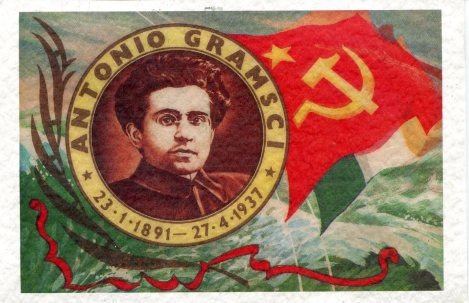
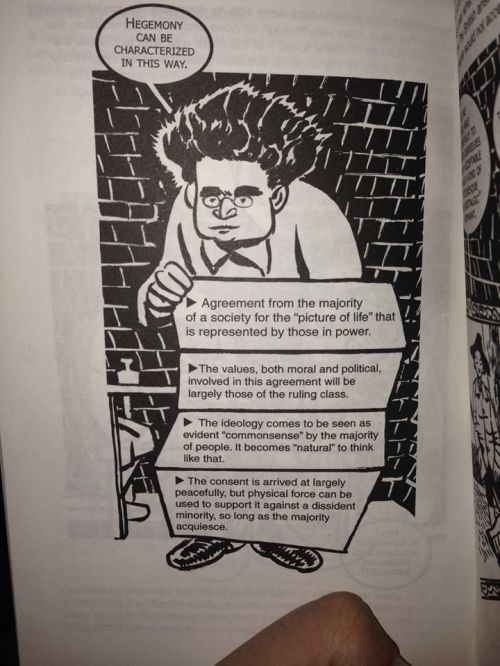
gramsci

1. Illusions of Modern Bourgeois Philosophy

     At the beginning of the 20th century three new developments in philosophy were taking place.  Each was based on a strategy which its proponents felt could grant immediate access to the thing in itself. The three strategies were analytic philosophy, phenomenology and structuralism.   All of their key words (referent, phenomenon and sign) played the role of what Levinas called a “neutralizing third term” they appeared to efface themselves in the process of bringing forth the unmediated truth of the world.  As time passed, these third terms became increasingly visible to practitioners of the strategies which they founded.  In the work of the late Wittgenstein and Richard Rorty, Martin Heidegger, Roland Barthes Jacques Lacan and Jacques Derrida we see a realization that the founding notions of 20th century philosophy did not grant the immediacy that they had promised.

Read the rest of this entry »

Notes on the Linguistics of Pecheux

monsieur-de-la-palisse

Notes are based on :

Michel Pecheux LANGUAGE, SEMANTICS AND IDEOLOGY  © Francois Maspero 1975 English translation © Harban, Nagpal 1982

Read the rest of this entry »

Violence and History

Do we as a species have a compulsion to destroy our own history? No, not as a species. It is only a few of the pseudo-species that we call nations who do.

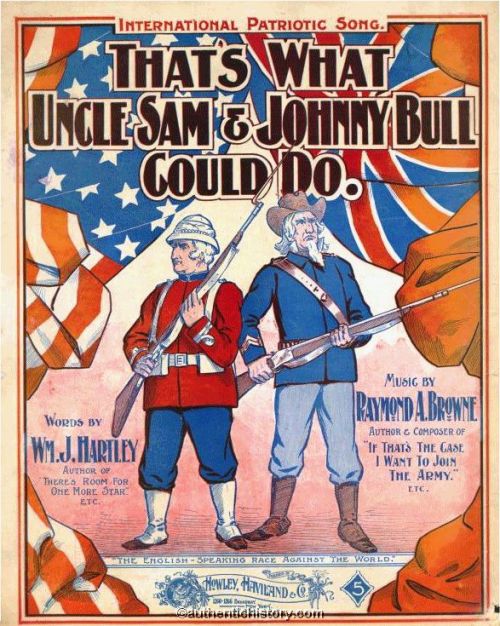
1899_sm_thats_what_uncle_sam_and_johnny_bull_could_do_1

Consider what the United States did and is doing to Iraq. Is it jealousy for their lack of history that motivates them? Perhaps, but it is possible to have a short and glorious history. In the case of the American oligarchy, it is the content of their history that motivates them. To them, history is something they have to run from, escape from, eradicate and so on. It counts as evidence against them. They bulldoze the libraries and monuments to build shopping malls. Beasts.

     Let’s think of this more concretely.  Imagine the United States are a person. He is born vulnerable and charming, but as he grows he becomes quite the troublemaker. In his youth and adolescence he murders one continent and enslaves a second. Coming to maturity, he builds the most destructive weapon of war in human history, uses it, and then proceeds to hold the entire world in subjugation. Now where do we find Mr. America?

Read the rest of this entry »

My “Cosmopolitanism”

diogenes_in_thomas_stanley_history_of_philosophy

It is becoming increasingly difficult to find any work that is not collaboration with evil.  Workfare and food insecurity, the threat of becoming “surplus humanity,” of slums, work camps and prisons, battlefields; these things try to intimidate us into a collaboration with evil, but they can never succeed. It can never be said that we had to–there’s always that moment of heightened contradiction, of a decision for or against open collaboration. In that moment, it is equally possible to recognize the contradiction and repudiate all collaboration. Evil can never enjoy full and total monopoly because the earth itself defies it.

Read the rest of this entry »

Drama and Rhetoric

shooting1

Some people believe that unity of action in drama refers to the presence of one all-encompassing unity, a single self-consistent action that is the subject of the drama. How one interprets this element of drama depends on a reading of the word action, a delimitation of its meaning. Action is ambiguous between the deed and the event. Action can mean a single deed done by a subject; however, it can also mean a combat of armed soldiers, in other words, it can also describe a grand and multi-subjective action. This is an action undertaken by groups of people. No single subjectivity can be held responsible for it. If we reflect for a moment, all action in drama is of this nature; there is tension between multiple characters, it is not the self-consistent act of one subject, but rather the actions of multiple subjects that give rise to the continuing action of drama.

Read the rest of this entry »

On Work

bourgeois-pig

Serving the bosses is going out of style. The bosses, o the bosses, those bosses. The ‘boss’ mentality is an evolutionary atavism: in a sane society, what we call a boss, a general, a banker, economist etc. would be referred to as a sociopath. The bigger the boss, the more monstrous the deformity.  Serving these bosses is going out of style.

They have robbed the country in broad daylight. They are snatching the bread from our mouths with their austerities and budget hoaxes. Under the Ancien Regime, the bosses were exempt from all taxation and we see the return of this now.  The bosses are demanding a total reduction of the social wage under the guise of budget cuts. Who has stepped forward to denounce this and call for action? This is a declaration of total war. 

Read the rest of this entry »

Consensus and Violence

houghton_ec-b1328-620ib_-_novum_organum_scientiarum

As Lord Bacon said, scientia potentia est: knowledge is power. Bacon warns the inquirer, the natural philosopher against the ‘four idols’– various forms of social prejudice– as obstacles to inquiry, and claims elsewhere that his inductive logic is superior to Aristotelian logic because it can be used to create new knowledge that makes life better, not merely to codify established truths. This seems like a great idea, science alleviating human misery; however, for Bacon, science can only investigate nature, it cannot inquire into matters of church and state. 

Read the rest of this entry »