Well burrowed, old mole!

Essays on Philosophy

Category: Imperialism

Laclau Notes Session 4: Contingency in Theory

1. Back to the Ancients

     The most ferocious attack on Rhetorical Theory came from Plato.  He claimed that rhetoric had no epistemological value at all. Rhetoric is concerned with the discursive movement of deliberation and not the question answer and two term choices which dialectic employs. In the Gorgias, Platon condemns rhetoric because it offers no coherent account of its own status as a form of knowledge, and because it is not possible to delineate a class of objects with which rhetoric is concerned.  Rhetoric is nomadic; it has no specificity and no domicile.  It is to be considered defective and incomplete by a Platonist because it offers a false ontology; it deals with the appearance of truth and good not the definition of the truth or the good.  It offers no epistemological certainty or foundation.  Above all, Plato judged rhetoric to be an amoral instrument of practical politics, unlike ontology and epistemology of course.  A paradox emerges from this account: though rhetoric is tangible and deals with the tangible its arguments cannot stand up to critical scrutiny. 
Read the rest of this entry »

Laclau Seminar Notes Session 2: Floating Signifiers and Heterogeneity

614d92f60a37cc6f9ddc73a949e5c091


  • The Moment of Hegemony

 Screen Shot 2016-03-27 at 12.36.23 PM    

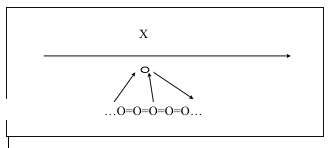
This is a simplified depiction of the moment of hegemony.  The X represents those on top of the frontier.  The antagonistic frontier can be said to be power, the X is sometimes a government.  It can also be the ruling class within a society.  The O’s below the frontier are the oppositional desires or the demands of those who are below the line.  The oval which is raised above the Os is the empty or hegemonic signifier, the arrow shows its origin from a particular desire or demand. These particular demands are arranged in an equivalential series by the emergence of the hegemonic signifier, the universalization or emptying of the hegemonic signifier is represented by the lines stretching from the oval to the chain of Os. 

This is a depiction of a situation in which those who are below the frontier of power have a series of demands which are unmet, and though their demands are different from one another, those who have these differing demands come to see them as equivalent and form a group under the articulation of one particular demand which comes to stand for opposition to X.  For instance, if many people have needs which are unmet in present day America, such as the need for affordable housing and health care, the desire to have more efficient garbage pickup in their neighborhood, the desire for a humane foreign policy and so on, they may end up campaigning for these diverse goals through the mediation of a group which articulates a different demand.  If these demands remain latent in the population, at any given moment if another group launches a large scale protest those with latent demands may join it even though it does not articulate their particular concern because it articulates unmet demand. 

     The X is in fact a group of people.  In order for them to maintain their position above the frontier, they must restrict the formation of such an equivalential logic.  If those who live under power can form a large enough equivalential chain they can overthrow those who are not meeting their demands.  There are two means by which the X will seek to keep the equivalential chain from forming, by articulating a logic of difference, or by constructing an alternative logic of equivalence. 

Read the rest of this entry »

Violence and History

Do we as a species have a compulsion to destroy our own history? No, not as a species. It is only a few of the pseudo-species that we call nations who do.

1899_sm_thats_what_uncle_sam_and_johnny_bull_could_do_1

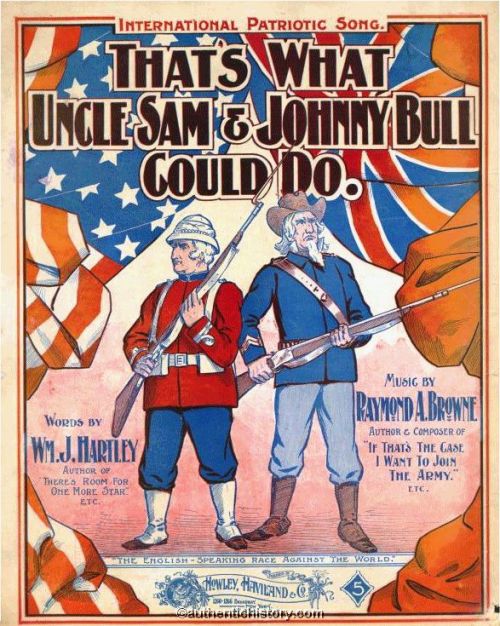
Consider what the United States did and is doing to Iraq. Is it jealousy for their lack of history that motivates them? Perhaps, but it is possible to have a short and glorious history. In the case of the American oligarchy, it is the content of their history that motivates them. To them, history is something they have to run from, escape from, eradicate and so on. It counts as evidence against them. They bulldoze the libraries and monuments to build shopping malls. Beasts.

     Let’s think of this more concretely.  Imagine the United States are a person. He is born vulnerable and charming, but as he grows he becomes quite the troublemaker. In his youth and adolescence he murders one continent and enslaves a second. Coming to maturity, he builds the most destructive weapon of war in human history, uses it, and then proceeds to hold the entire world in subjugation. Now where do we find Mr. America?

Read the rest of this entry »