Well burrowed, old mole!

Essays on Philosophy

Category: Foucault

Laclau Notes Session 3

Review of the History of Rhetoric in Relation to Philosophy

1. The Ancients-Form and Matter     

     For the Greeks, what is sayable of an object is universal, but we must ask, what is the “it” which receives the predications?  For the Greeks all predicables are universals; they make up the form or the rational and knowable part of the entity of the object.  The “it,” the irrational and unknowable individuation that remains when you take away all predicables, is called matter. The Greek thought of the universe as a scale.  At the bottom was the unnameable primary matter hyle.  The first principle of organization was the mineral world where form was imprinted on this primary matter.  The mineral world was as matter to the vegetable world, the vegetable to the animal, the animal world to man, and on top the Gods were pure form and stood as matter in relation to nothing.  
Read the rest of this entry »

Notes on the Linguistics of Pecheux

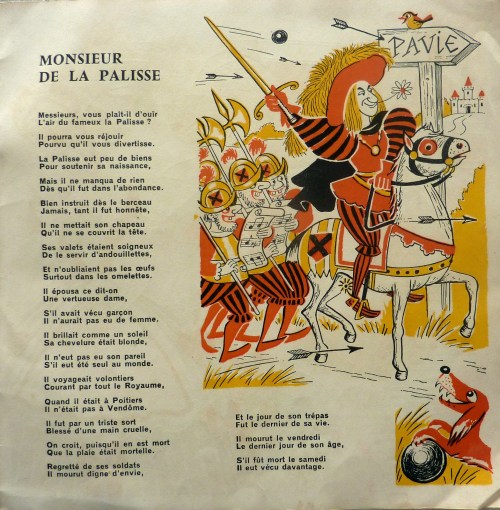
monsieur-de-la-palisse

Notes are based on :

Michel Pecheux LANGUAGE, SEMANTICS AND IDEOLOGY  © Francois Maspero 1975 English translation © Harban, Nagpal 1982

Read the rest of this entry »

Occupy Wallstreet

bla3-300x220    

Written shortly after attending the events described below.

On September 17th 2011 it became apparent that something had changed in the United States. On that date, about 1,000 people arrived at the Bowling Green in lower Manhattan under the slogan “Occupy Wall Street.”  The call had been put out months before by Adbusters magazine, and had called forth an action that defied the logic of the typical permitted, pre-contained march.  In the park one could hear an open economics forum featuring speakers advocating the reinstatement of Glass-Steagall, denouncing the second law of thermodynamics as a fabrication of British Imperialism, calling for the global forgiveness of all debts, among other things.  Alongside the forum one could hear calls to shut down the Stock Exchange, to abolish debt-money and so on.  Here debates were reopened that had been shut down for a century at least.  A depoliticized society began to stir…

Read the rest of this entry »

The Problem of Postmodernism

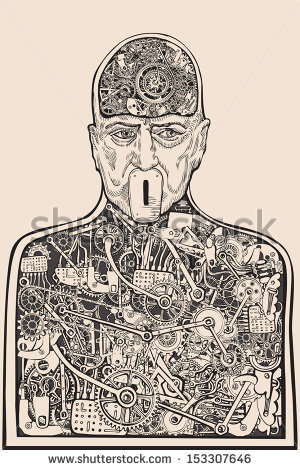
stock-vector-coin-operated-automaton-153307646

In his essay, “Twilight of the Machines” John Zerzan speaks the truth about the “postmodern” age.  He is not a scholar in the bourgeois university,  as many other critics are, which means he does not have to jump through the hoops of academic convention; he may speak the radical truth. Zerzan speaks as a philosopher and a revolutionary, breaking radically with the “Washington Consensus” of market totalitarian society. 

Read the rest of this entry »

Improper Life (Book Review)

Timothy C. Campbell, Improper Life: Technology and Biopolitics from Heidegger to Agamben, University of Minnesota Press, 2011, 189pp., $25.00 (pbk), ISBN 9780816674657.


Timothy Campbell’s Improper Life is an exposé of the consequences of accepting Martin Heidegger’s philosophy of technology. As he explains on page one, “to the degree that we speak of biopolitics today, lurking beneath is a conception of technology deeply indebted to Heidegger’s ontological elaboration of it.” He aims to isolate the emergence of a politics of death in Heidegger, and to show how it has impacted thinkers who try to critically appropriate Heidegger’s work. This book is a response to a crisis within contemporary academia; the historicist/posthumanist/biopolitical paradigm seems to be incapable of offering anything but fatalistic prophecies of doom when it comes to the relation between life and technology.  Campbell follows Heidegger’s ontologization of technology in the work of Giorgio Agamben, Roberto Esposito and Peter Sloterdijk. The first three chapters of the book are devoted to critical readings and in the fourth, Campbell offers an outline of what he calls an affirmative biopolitics which historicizes biopolitics instead of ontologizing it and thus releases other potentials than the current entanglement of technology and death. 

Read the rest of this entry »

Consensus and Violence

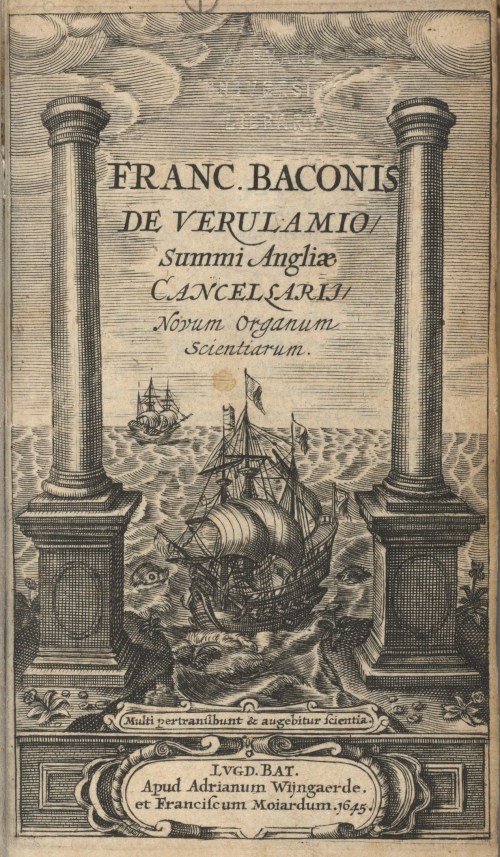
houghton_ec-b1328-620ib_-_novum_organum_scientiarum

As Lord Bacon said, scientia potentia est: knowledge is power. Bacon warns the inquirer, the natural philosopher against the ‘four idols’– various forms of social prejudice– as obstacles to inquiry, and claims elsewhere that his inductive logic is superior to Aristotelian logic because it can be used to create new knowledge that makes life better, not merely to codify established truths. This seems like a great idea, science alleviating human misery; however, for Bacon, science can only investigate nature, it cannot inquire into matters of church and state. 

Read the rest of this entry »

The Courage of Truth

Courage

Who among us has the courage to utter the unspeakable? This type of courage is what is most necessary in free human beings.  The person who possesses this type of courage is the only human being who can claim to be honest.  Knowing what any group defines as the unspeakable is a major key to that group’s motives and nature.  We should always ask ourselves, what is it not possible to articulate within their way of speaking?

foucault

It is often regarded as cruelty to perform the act of speaking the unspeakable.  However this is one case where cruelty should have  positive connotations because cruelty contains an element of fearlessness which is foregrounded in this act.  Thus, there is the English expression regarding the cruelty of some truths.  The articulation of the unspeakable is often the result of a pitiless evaluation, a ruthless evaluation, an evaluation that does not judge in terms of good and evil.  This should be contrasted with the Kantian critique, the critique that justifies its object,  whose axiom is that one should begin by believing  in that which one criticizes. 

Consider a person who walks into a shopping mall and says, “the necessity of work is a myth that is used to enslave us” or the scene in I Heart Hukabees where the fireman character states that Jesus can in fact be mad at someone who believes in him, that faith is not enough.  Another example would be the case of Dr. Wilhelm Reich, and the persecution that he endured for bringing out the connections between politics and sexuality.  What do all of these people have in common? They all have the courage to articulate that which a certain situation is configured to hide. As Hegel put it, “The courage of truth…is the first condition of philosophising.”

Read the rest of this entry »