We must begin by acknowledging a presently existing form of anarchy, one which is largely dormant, but one that can become more manifest. In other words, we must begin by acknowledging that all existing hierarchies are based on the quasi-voluntary association of free persons to a much greater degree than is generally conceded. Most Americans, and citizens of first world countries, live a large portion of their lives with no actual hand holding a gun to their heads and forcing them to obey anything. Most of these countries right now run on “auto-pilot,” most people regulate themselves for the system, or more precisely are regulated under their own supervision for the system. One can even hypothesize that, following Sartre’s discussion of the solitude in which the reception of a command leaves one, without self-organization no institutions are possible at all. In practice, there are groups of people who claim to be in charge and so on, but if their so-called subordinates do not use their own creative capacities to carry out the directives they are given nothing at all would be possible except frustration.
A great mass of consciousness is currently configured in such a way as to make a realization of the fact that we ultimately regulate ourselves in the interest of a system which exploits us unthinkable or at least very difficult to think. If this is difficult to think, the thought that we could reorganize in a different way should be impossible, but this is not the case. How are people led to forget the anarchy of the pure present which is the first experience of life and its prevailing atmosphere for much of early childhood? The answer is two fold, they are not, and an attempt is made to do so by various means which it shall be our task to explore, these are commonly called “mainstream culture”. People never forget this experience because it recurs in life very often; this is the case when one witnesses a crime, or when one is present at a momentous conjunction of forces, it is the sensation of suspension of the law. We feel for a moment that law only exists in the past and that right now that could cease to be the case. In this type of moment we have a taste of something, something which has been subject to manipulation and mystification for far too long.
It is a corollary of this position that authority is quite different than many people imagine it to be. Mao was quite correct when he characterized the United States as a ‘paper tiger’ implying that its power was possessed of a different type of substance than it would have us believe. This is a good figure for all authority; authority is not power, and we confuse the two at our peril. If we wish to choose a similar image, possibly more familiar to most people in the United States, we can say that authority is a “scarecrow” or a “straw man.” How does the scare crow function? How is it possible for the paper tiger or the straw man to compel and discourage behaviors? Kenneth Burke almost explains this when he discusses the issue of the externality of voices to the individual mind. He claims that an external voice can never successfully compel anyone to do anything unless it is internalized, but he neglects the fact that the external voice does not just penetrate the skull by osmosis. One is not penetrated by the voice, one becomes the voice and the voice becomes one. The farmer only has to chase the birds a few times and put up a straw man, then they regulate themselves through fear, he does not have to be present in the field at all times, yet the crows act as if he was. The important point here is that the farmer has power, and the birds have power; now, the farmer puts the straw man in the field and the crows endow it with significance, they regulate themselves based on this attribution of meaning. Similarly, in intra-human affairs authority does not compel submission; most of what we would classify under this heading should be thought as participation in the most concrete sense in the legitimation of law. No law is ever fully legitimate but it is a constant process of legitimation. Thus, we can say that authority depends for its force on the actions of those over whom it is said to be wielded. Authority is the legislative power, the force which is the law which never achieves legitimacy. That this should continue to return, that it should be reproduced on a daily basis bespeaks a complicity in the creation of one’s own manacles which is the basic principle of politics.
Thus, we can see that authority has a ritual character, and as Joseph Campbell has claimed, ritual is the enactment of myth. However, it seems that thinkers like Campbell and Eliade have performed an inversion here. It seems that myths are both a sublimation of the individual’s role as participant in the reproduction of authority, and consumption of such myths is a form of such reproduction at the same time. Rituals in the anthropological sense and rites of various kinds are attempts to instantiate a world in which the apologetics of the myth become truth. In the case of American society, we can formulate one example among many as follows: the first term is the oppressive workday in the work or starve environment of mutual hostility, the myth is the American Dream world of advertisements, and the ritual is the act of watching television, or visiting places such as Disneyworld where the corporate dream-world displaces focus from the life-world which surrounds it and in which its values are empty and unwelcome. However, the ritual act of watching television does not end when one turns off the set to retire. Cues for the television watching mind exist dispersed throughout reality and the right cue can effect a televisionification of the life-world, a moment in which decisions about non-television situations are made based on principles derived from television shows. This effect is very important in the propagation of authority, but the basic principle which we can extract from it is more important. When we say that decisions are made based on television principles, what we actually mean is that memory of the television displaces the concrete situation, the ‘social rules’ values and modes of conduct which are manifested on the television come to be identified with those which are at play in concrete non-contrived situations, memory of the television is equated with social experience, and displaces it. Thus, we can say that the basic currency of authority is memory, the creation organization and direction of memory is what keeps authority in existence. Consciousness is composed of memory and attention and we must assert that attention is under the power of memory in most cases, in our first moments of life we have openness, but it gradually accumulates memory, through means I shall discuss in the next paragraph, which transforms it into attention and hence consciousness, most times we see what we remember to look for.
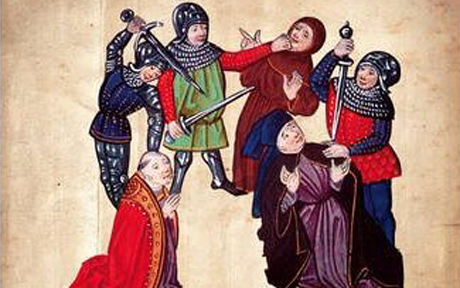
Nietzsche has shown us how authority creates memory through violence, more specifically through cruelty. Walter Benjamin echoes this in his discussion of the legislative force of violence. Benjamin states that violence can be law-making, law-maintaining, or law-destroying. What authority is composed of are disconnected acts of violence and memory networks which attempt to link them in such a way as to make them seem connected, apologized for, and justified. How are memory networks established? They correspond inevitably to networks of violence, something like Canetti’s sting of command circulating through a group, hey he kicked me so I’m gonna kick you. The act of violence is not justified we are made complicit in it, we reproduce it and thus remove the need for justification. In the case of America, we can say that the first law making violence was simultaneously a law-destroying violence, the revolution against England and today’s networks of law-maintaining violence occur in situations of mass audience concentration such as school-houses. However, for the concrete individual the first acts of law-making violence are committed against them by their families who commit them as semi-conscious acts of law-maintaining violence. These acts prepare children to endure the imposition of ‘discipline’ in the schoolhouse. The parent knows a certain sadism of command combined with paranoia, I love you but what will the others think if I do not do this coupled with how dare you resist what I do for your own good you’ll do it because it is my will. In this case, what the parent is doing is appropriating the imperative of their own paranoia about the group, and achieving the filthy jouissance of complicity in the crime which oppresses them in inflicting it on the child. These forces derive from the parent having undergone the same violent inscription as a child and having endured law-maintaining violence in the form of the barking sadistic boss and the merciless ticking of the office clock, as well as the hazing received as a condition of affiliation for many groups.
When we think, Why bother going to work, why should I? this is not depression or laziness, ( a la Nietzschean bas conscience) but a call to action in another direction, a call to form a new type of society in which joy and desire are valued rather than order and structure. It is no coincidence that we do not value order and structure until we are taught to. These values are in no sense directly related to the pursuit of our own well-being or that of our families, they are in all instances code words for other values which if revealed would be immediately rejected. We are told by institutions to value order and structure in our lives as a matter of their convenience, for example, a slave owner in the south would have said that he hanged a black man to maintain ‘order’ what he actually means is the order of things or the status quo. Or today, an educational institution values the eight hour school day because it reproduces the corporate workday, and engraves it as the immutable form of normalcy in the formative period of early childhood, but the spokespersons of this way of doing things will say that it is necessary for the child to have ‘structure’ in their life. Each of us as a living being resists stasis on the cellular level, order and structure are inimical to life if they are raised above it.
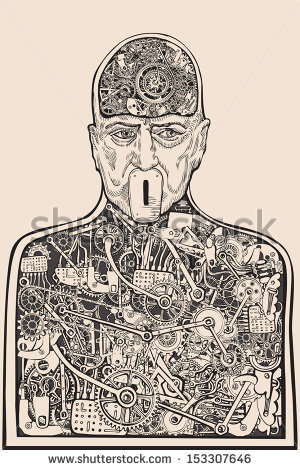
This question why bother? comes to most of us as an overflow of the energy of life in us wishing against ‘reason’ to cast off our shackles and live, it does not bespeak a lack of motivation it indicates a damming of the flow of desire which we seek to remove in spite of all of our so-called education. It indicates a greater motivation to greater acts which we cannot achieve from a cubicle, acts which require that we have the time to determine our own lives and do not have to serve the system for the entire period of daylight 300 days per year. However, the realization of the significance of this impulse, the comprehension of our own vital flows is not yet at the level of conscious awareness. In fact, the present form of social organization depends for its continued existence on the hope that this awareness will remain submerged, that this type of lucidity about our own power and this type of seizure of the power of meaning attribution over our own mental states will never come to presence in the majority of people, or even a significant minority. The system produces thousands of well-paid experts who tell us that there is something wrong with the person who does not want to live the majority of their life in a cubicle under fluorescent lights, who does not want to come home to the dull hum of the television every night. These experts will claim that this person should take pills which help them adjust to that life, these experts never even countenance the possibility that the society is flawed, not the minds of the people.




 Well burrowed, old mole!