Critical Notes on Ernesto Laclau’s Seminar on Rhetoric and Hegemony
by Mark S. Lennon
Session 1: Introduction to Laclau’s Theory of Hegemony
1. Illusions of Modern Bourgeois Philosophy
At the beginning of the 20th century three new developments in philosophy were taking place. Each was based on a strategy which its proponents felt could grant immediate access to the thing in itself. The three strategies were analytic philosophy, phenomenology and structuralism. All of their key words (referent, phenomenon and sign) played the role of what Levinas called a “neutralizing third term” they appeared to efface themselves in the process of bringing forth the unmediated truth of the world. As time passed, these third terms became increasingly visible to practitioners of the strategies which they founded. In the work of the late Wittgenstein and Richard Rorty, Martin Heidegger, Roland Barthes Jacques Lacan and Jacques Derrida we see a realization that the founding notions of 20th century philosophy did not grant the immediacy that they had promised.
These strategies have something in common, none of them posit contradiction as their foundational concept, all seem to be alternatives to the dialectic. These strategies can all be read as philosophies of being, as opposed to philosophies of becoming, in other words as idealist philosophies as opposed to materialist ones. This is the fundamental difference between these philosophies of abstract identity and Marx and Engel’s philosophy; these philosophies all depend on a fundamental pulling out of the flux of history, the construction of a ‘conceptual utopia ’ an ideal realm of unmediated truth, rather than a concrete striving to change the world so that everyone can eat (which would amount to a radical mediation of theory and practice, idea and history). Though each of these traditions enjoyed significant contributions from persons who had understood and affirmed Marx’s insights, Russell, Husserl and de Saussure all attempted to establish a realm of truth where philosophy could operate independent of all political commitment–negating the famous 11th thesis on Feuerbach according to which, “Philosophers have hitherto only interpreted the world in various ways; the point is to change it”, in favor of a self-contained realm of ideal representations, a closed totality. The work of Sartre, Barthes, Dewey, Althusser, and Rorty all point to the political as the ultimate sphere at which philosophy should aim, the ‘utopia of the idea(l)’ is replaced by a striving toward Earthly political goals as the aim of the philosopher. Althusser will point to Lenin’s discovery that philosophy is not unto itself, that it embodies class conflict; Rorty will tell us that philosophy should found itself on social hope; Dewey discusses the difference between Aristotle and Bacon.
This collapse of idealism in the form of a collapse of these new philosophies of abstract identity has been articulated as a transition to theories of discourse, but we must keep in mind that this transition is related to a larger collection of problems; it presupposes a number of questionings and overcomings such as the overcoming of the idealist notion of being, the overcoming of ontotheology-the humanist tradition of speaking of secular things in religious ways-a general questioning of an inherited metaphysical architecture from which the moderns were supposedly trying to free themselves.
2. The Structuralist Path
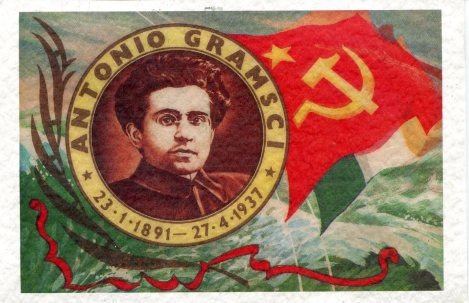
The transition from Saussure to structuralism to post-structuralism has been of all the abovementioned traditions the most influential in the formation of the theory of hegemony. Thus, we will need to examine it in greater detail. Laclau claims that post-structuralism is “the framework [within which] we can understand the emergence of the theory of hegemony, which is the central piece of the discourse analytical approach to politics.” We must also note that the idea of hegemony in this context points back to the Italian revolutionary thinker Antonio Gramsci, who elaborated it in his conflict with Italian reaction and fascism. What Laclau and Mouffe have discovered may be just as much a post-structuralist discourse centered approach to politics as it is a decisive contribution to the development of a Marxist approach to discourse and possibly language as such. But we shall leave discussion of that point for another time. We must now focus on Laclau’s analysis of the transition from Saussure to structuralism to post-structuralism, and the conception that he puts forward of the connectedness of his theory to others in this tradition.
Laclau explains the structuralist tradition by breaking it down into three moments. The first moment is to be found in the work of the Swiss linguist Ferdinand de Saussure, who is today called the father of semiology and structural linguistics. Saussure’s theory is structured by four pivotal distinctions and two basic principles.
The distinctions are:
- langue-parole: the langue stands for the social treasure of language in the mind of the speaker, the parole for the individual language events.
- signifier-signified: the signifier is the “auditory image” when it is unified with the signified or “conceptual material” these form the sign
- syntagmatic-paradignmatic: these are the of relations of combination and substitution between signs, they are said to constitute axes
- synchronic-diachronic: that we should study language synchronically, as it is in a hypothetical instant, instead of studying it as it changes across time(using a diachronic perspective like Saussure’s predecessors the German neogrammarians).
The principles are:
- All identities in language are differential; an element in the system is what it is because it is not everything else.
- Language is form not substance; the rules of combination and substitution operate independent of content.
This brings Laclau to discuss the flaws in this conception. He finds two major limitations: first, Saussure had no means of discussing the workings of language above the sentence level, the discursive type of combination does not obey the rules of sentential concatenation, therefore Saussure disqualifies it as an object of study. This methodological decision blocked the way to the general study of the life of signs in society which Saussure called semiology, by excluding the mediator between linguistics and semiology in super-sentential combination. The second flaw is a contradiction in Saussure’s notion of the sign. Saussure stresses the isomorphism between signifier and signified, where there is one signified for every signifier and one signifier for every signified; if we affirm this at the same time as we affirm the second principle, we must ignore the ‘merely substantial’ difference between signifier and signified and they become theoretically indistinguishable.
The resolution of this contradiction occurs in the second moment, “the radicalization of the structural formalism by the Prague and Copenhagen schools.” In this moment, Hjelmslev bypassed the Saussurean contradiction by breaking the word down into smaller units called phonemes, these are the sounds that make up a word. Thus, the isomorphism is no longer there to create the contradiction. This purely formal theorization of language allowed for the development of the semiology which had been stifled by the restrictions which Saussure imposed. Now the techniques from linguistics could be used to analyze signification in general, to analyze symbol systems in all areas of social life, this work was taken up by Barthes, Levi Strauss and many others.
These practitioners of the general science of signs were the ones who would bring us to the third moment, the post-structuralist moment. These thinkers came to question the closedness of the totality. If we consider the case of linguistic change and the langue we can see the inadequacy of the closed totality. In language change, it is not only the form of the signifier or the signified which changes but change must affect the correlation of signifier and signified. The previous researchers in this tradition had not considered this because of their adherence to the synchronic perspective. Laclau gives the logical structure of synchronist argument as follows: the synchronic perspective is justified on the grounds that linguistic change is slow and on the grounds that the sign is arbitrary. However, if we study language in discourse rather than in the sentence, we find that change is actually more rapid, and if we think about it some people do have an interest in changing or maintaining signs, thus they are not really arbitrary.
It is from this critique of the first moment from the perspective of the second moment that the third moment emerges. With this breakdown of the self-containedness of the totality we need logics of variation to describe the new de-totalized structures. Barthes gives us this with his development of the concepts of denotation and connotation, where he shows that denotation which is systematic and obeys the rules of a totality is only a moment of relative stability in the evolution of connotation which is not so obedient. Derrida makes a similar discovery with his deconstruction and Lacan also with his logic of the signifier.
In all of these cases we are lead back to some form of the dialectic, to some example of contradiction as a basic principle of organization, structural organizations tend to develop by means of internal aporias which can only be resolved by redefinition of the rules which determine the structure.
3. Post-Structuralism and the Theory of Hegemony
The theory of Hegemony is summarized by Laclau in the following ‘logical steps’
- Signification presupposes a closed system if all identities in a signifying space are differential, otherwise we would have only dispersion
- Almost any attempt to establish the closure of the system by defining its limits results in absorption of the limit as just another difference in the system as much internal to it as external.
- The resolution of this dilemma is that the system is based on a constitutive exclusion, similar to the way groups define themselves by an enemy or a victim.
- If we accept this then all elements in the system differ yet are equivalent in being opposed to the excluded.
- All identity is the tension between equivalence and difference, identity is necessary and impossible just like systematic closure.
- All attempts to directly represent the totality necessarily distort it, a particular difference is used to stand for what is irrepresentable, and this is the hegemonic relation a particularity that comes to stand for the totality.
Hegemonic relations are central to the study of discourse; they are founded on the contradiction between the necessity and impossibility of systematic closure. This necessity is the desire for fullness, which is always present but always deferred due to the impossibility of finding fullness in the differential system. Hegemonic relations are also central to the study of politics; the two main dimensions of political life according to Laclau are equivalence (combination) and difference (substitution), the composition and decomposition of social forces. This allows us to discuss social life using a generalized rhetoric without imposing an artificial closure on the identities within the social field. Using Laclau’s system, we can develop a theory of social becoming, the displacement of identity, the dynamics of the social division of being. This generalized rhetoric centers around three terms, discourse/relation, empty signifier/hegemony, and rhetoric.
Discourse is not to be restricted to linguistic or purposely signifying acts; Laclau defines it as “any complex of elements in which relations play the constitutive role.” It is only through the mediation of discourse that objectivity is constituted, thus we can discuss social life and ontology in terms of a generalized rhetoric which uses the means that the Saussurean school used to discuss the linguistic, but without that narrow focus. Saussure’s basic idea that the identity of any element is constituted by the play of differences, i.e. that there are only negative differential identities in his langue, is retained here and applied to life, sociality, politics and ontology.
A crucial element of discursive processes is what Laclau calls the empty signifier. What it does is to provide the apparent closure which is necessary to signification. As we have already seen, this closure is both necessary and impossible; closure is necessary for signification to occur because the signifying elements must be different from everything else, but it is impossible for us to comprehend the entire totality by any conceptual means. Laclau claims that signification can still occur by means of the empty signifier, a particular difference within the system which can do double duty as particular difference and totality. This is the hegemonic relation; this particular element takes up a universal signification, signifying that which is impossible within signification, the totality. Because this is not a conceptual determination of the totality by a determined ontic content, many particular differences can play this role, in principle, any difference can become the empty signifier.
Due to the arbitrariness of the empty signifier, the fact that it is the catalyst of a hegemonic totalization rather than a participant in a verifiable conceptual determination, the empty signifier requires a radical investment in order to function, an investment which cannot be determined prior to experience. (This whole notion of ‘investment’ seems to me to be an alienated understanding of practice and forms the basis for a critique of Laclau’s system. His problematic reliance on Heidegger and Lacan etc etc) A priori we can know that an empty signifier will be there, as the horizon of signification, but we cannot know which one, the choice of the hegemonic signifier does not admit of demonstration (apodeixis) in the mathematical sense.
This brings us to the third term, rhetoric. Rhetoric for a long time was reduced to the study and classification of the figures such as parataxis, irony, metaphor and so on. However, there is also another side to rhetoric, the study of argumentation. Rhetoric can also ask how do we make decisions that do not admit of mathematical demonstration, which are not matters of certainty? This is the side of rhetoric which has been explored by Perelman, rhetoric conceived of as the study of practical reasoning. As we have seen, the choice of an empty signifier does not admit of mathematical demonstration, and thus it falls within the bounds of rhetoric. Hegemonic totalization can be understood as a rhetorical process because as Laclau says, “there is a rhetorical displacement whenever a literal term is substituted by a figural one.” This is precisely what is going on when one particular difference simultaneously signifies the (failed) totality.
Cicero claimed that rhetorical figures originated from a primitive empirical ‘penuria nominem’ or poverty/lack of names, where there were not as many words as things that one would like to signify. Laclau claims that this poverty is constitutive because language requires that we “name something which is essentially unnamable as a condition of [its] functioning.” Thus, he disagrees with Cicero, language begins with the figural because we have to signify that which escapes signification in order for language to be functional, in particular he claims that language is fundamentally ‘catachrestical.’ Catachresis is the rhetorical trope in which we use figurative terms to signify that which has no original literal term. For instance, when we say ‘leg of the chair’ there is no other literal word for that. Catachresis is the process of hegemonic totalization; in such totalization, we use a term figuratively to signify that which has no literal term, the individual difference stands for that which is not a difference but an unsignifiable exclusion.
 Well burrowed, old mole!