Drama and Rhetoric
by Mark S. Lennon
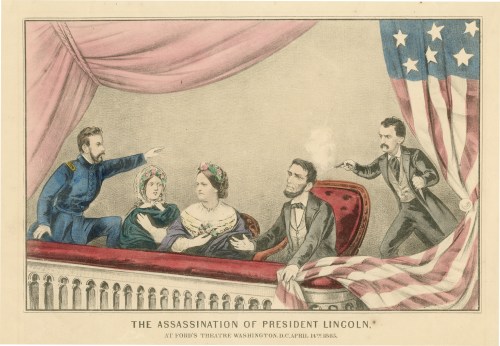
Some people believe that unity of action in drama refers to the presence of one all-encompassing unity, a single self-consistent action that is the subject of the drama. How one interprets this element of drama depends on a reading of the word action, a delimitation of its meaning. Action is ambiguous between the deed and the event. Action can mean a single deed done by a subject; however, it can also mean a combat of armed soldiers, in other words, it can also describe a grand and multi-subjective action. This is an action undertaken by groups of people. No single subjectivity can be held responsible for it. If we reflect for a moment, all action in drama is of this nature; there is tension between multiple characters, it is not the self-consistent act of one subject, but rather the actions of multiple subjects that give rise to the continuing action of drama.
Our formula is not yet complete, the power of drama is the interaction of multiple subjects with their surroundings, to neglect the surroundings would be a tragic oversight. The term surroundings is quite broad, it includes social forces, natural forces, all orders of existence animal, mineral, vegetable, and beyond. All of what Artaud would call the mise-en-scène. There are several layers of surroundings; first, we have the immediate surroundings in the narrative of the play; second,we have the surrounding venue where the drama is performed, and third, the world in which the venue has its place. The surroundings have a mode of action that differs from that of thecharacters; it is an action without a subject. It does not have a discernible being to stand as its representative.
Overall, the unity of action is concerned with the unity of the actions of the surroundings and the actions of the characters. This is not an integration, or a synthesis; the unity of these actions is attributable to the fact that the sphere of character action is constituted by the “surroundings.” These characters and their situations could easily be “surroundings” for another drama, as can be seen in the Athenian dramatists’ elaboration of Homer. The unity of action is the extent to which this dependency is developed. It is the construction of a plane of action that cross-cuts our habitual distinctions.
Action is mutually convertible across the subjective and non-subjective realms, in a sense, it renders them consistent with one another. This is not merely an aesthetic trick, this is another way of analyzing the actual world in which we live, in the drama we have it in miniature.
From this histrionical materialist perspective, let us examine the relationship between action and discourse. The conception of action that unifies characters and surroundings is the conception of action as the production of effects. When we look at discourse (or representation if you prefer), we tend to see it posed next to a world it purports to be about. This ‘aboutness’ is taken more generally to characterize consciousness as well as discourse. In order for such ’aboutness’ to make sense, discourse must be able to separate itself from action, lest it would cease to be ‘about’ action and become just another action. However, we also cannot deny that discourse has the capacity to affect. Discourse can only be manifest through action, often discourses are broken down into minute series of actions. Discourse is always doing something, naming and capturing desire, hemorrhaging images, but it does these things as action in the social world. This is Plato’s insight and his error when it comes to the sophist; it is true that by his criteria that discourse can be subsumed under the category of social action, but this does not leave rhetoric without an object. Discourse, and action are prior to objects; this is the primary insight that is forcing its way through this dialogue; rhetoric reveals that there is not yet an object until one is within a specific discourse. Objects depend on a constitutive contextualization. This is because in their material existence they depend on relations which connect them to an ecology, an environment, a history. The isolated object is as absurd as the isolated idea–it is a Robinsonade
 Well burrowed, old mole!