The Stoics and First Philosophy
by Mark S. Lennon
The Stoics offer us a key to developing an egalitarian alternative to ontology. A Stoic line of reasoning might proceed as follows. All relations are cosmic relations. By definition, the cosmos is an inter-related totality. We call this the logos. Hence we do not have ontology, we have philosophical cosmology. Instead of the ontological difference, the conditional relation is our first principle.
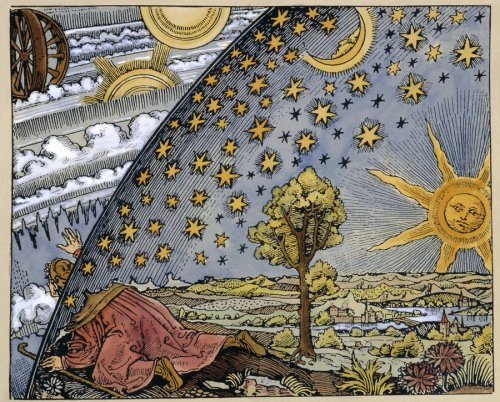
The cosmos is the material embodiment of logos, it is the practical, corporeal enacted logos; but this same process is at work in our minds. Our minds are products of a certain series of cosmic relations—combinations, transformations and so on—which are also the inevitable contents of our thoughts. Our minds are capable of grasping the relational backgrounds that bring them into existence. This is the cosmological foundation of materialism.
We can achieve grounded materialist objectivity if we want to because we can gain enough information from our environment to explain the material foundations of our own thought processes.
The logos is thinkable for our minds because it is the set of physical preconditions for the existence of the mind—in a sense they are impressed upon the mind, as in evolutionary predispositions like breathing seeking to escape fire the physical knowledge involved in walking and so on.
These evolved instincts are millennia of adaptive activity compressed into our bodies. They express a subconscious logic in which the conduct of our lives is indistinguishable from the surroundings, an ongoing logical process in which we participate.
Real logic has content, it is in the form of conditional relations. All formal or subjective logics derive from this material and practical foundation—the cosmos is structured as a totality of conditional relations—the subjective formalistic logic seeks to negate the content and neglects the conditional.
Conditions must always preceed categories.
 Well burrowed, old mole!